





What's Happening?
The Aerospace and Defense Industry is facing significant challenges in its supply chain integration, driven by rising defense demand and commercial aerospace production ramp-up. According to Aerospace Innovations, the industry's long-standing model of
global supplier networks, designed for efficiency and specialization, is now under stress. Suppliers are grappling with labor shortages, inflation, raw material constraints, cyber risks, geopolitical instability, and limited production capacity. This situation has led to a strategic re-evaluation, prompting companies to consider greater vertical integration to gain control over critical parts of their supply chains. The complexity of aerospace and defense products means that a single weak link, often hidden deep within Tier 2, Tier 3, or Tier 4 suppliers, can delay entire programs, making resilience a paramount concern.
Why It's Important?
The challenges in aerospace and defense supply chains have profound implications for U.S. national security and economic stability. The inability to produce advanced aircraft, missiles, satellites, and defense systems efficiently due to supply chain bottlenecks directly impacts military readiness and strategic capabilities. For U.S. companies in this sector, the need for vertical integration means significant capital investment and operational adjustments, potentially increasing costs but also enhancing control and resilience. This shift from an outsourcing mindset to a strategic control mindset is crucial for maintaining a competitive edge and ensuring timely delivery of critical defense assets. The issue also highlights the vulnerability of complex manufacturing to global disruptions, affecting job security and economic output in a vital U.S. industry.
What's Next?
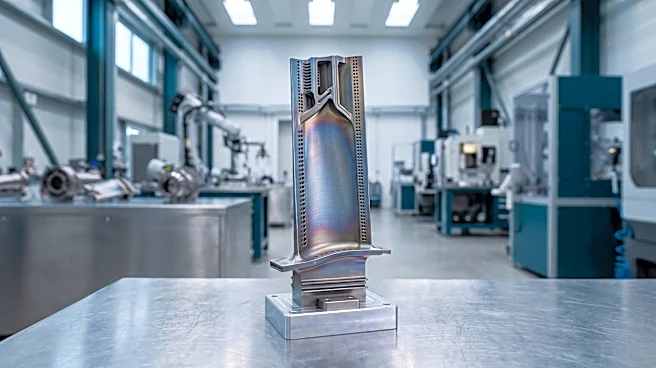
The aerospace and defense industry is expected to implement a strategic playbook to address these challenges. This includes mapping real supply chains beyond Tier 1 suppliers, identifying strategic bottlenecks, and choosing appropriate control models such as ownership, long-term partnerships, or dual-sourcing. Investment in supplier development and earlier alignment of engineering and supply chain decisions are also anticipated. Furthermore, increased collaboration between government and industry is crucial, with calls for stable demand signals, multiyear procurement, faster contracting, and targeted investment in critical industrial base capabilities. Companies like Safran and Lockheed Martin are already demonstrating this trend through investments in forging capabilities and new munitions production facilities, indicating a move towards strengthening internal capacity and securing production lines.
Beyond the Headlines
The push for vertical integration in the aerospace and defense sector reflects a broader re-evaluation of industrial strategy, moving beyond pure cost optimization to prioritize resilience and national security. This shift could lead to a more robust domestic manufacturing base, reducing reliance on foreign suppliers for critical components and technologies. It also raises questions about the balance between efficiency and security, potentially leading to higher production costs but greater strategic independence. The ethical implications include ensuring fair labor practices and environmental standards within newly integrated or diversified supply chains. Long-term, this trend could reshape global defense procurement and industrial partnerships, fostering a more localized and secure supply ecosystem for critical defense technologies, ultimately impacting geopolitical power dynamics and technological leadership.