



What's Happening?
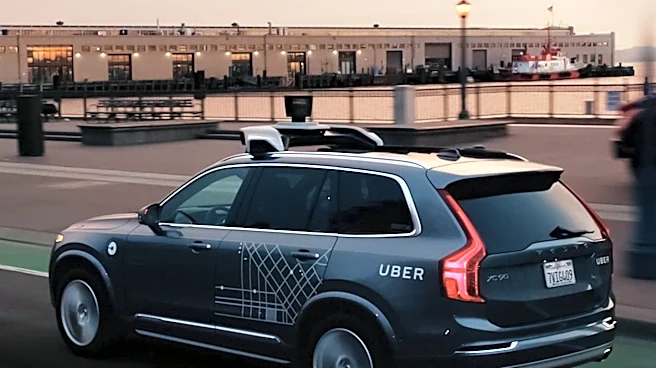
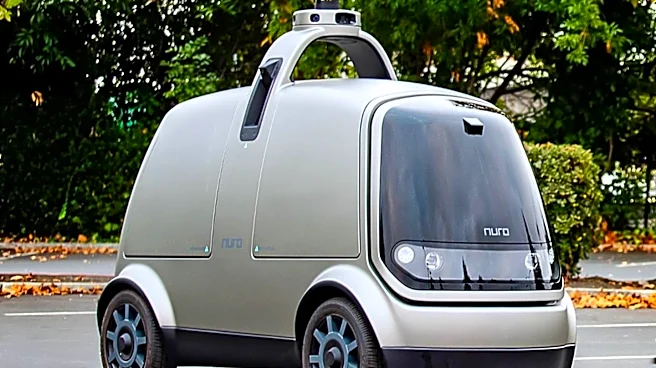
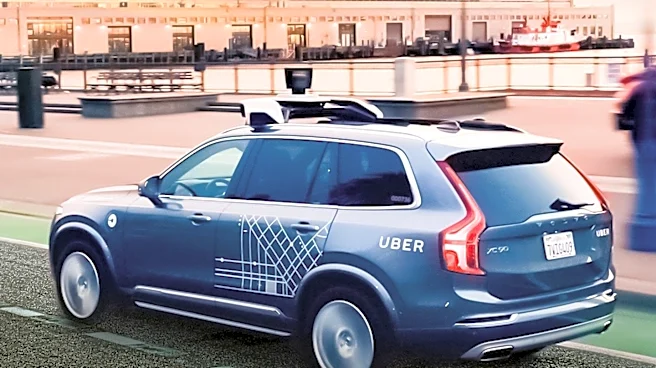
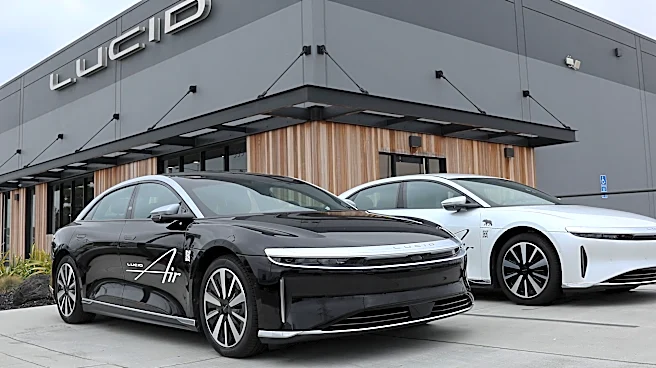
Nuro, in collaboration with Lucid and Uber, has commenced driverless public road testing of over 100 upgraded Lucid Gravity vehicles in four San Francisco Bay Area cities: Palo Alto, Mountain View, Los Altos, and Sunnyvale. This development follows Nuro securing
its California DMV driverless testing permit approximately six months prior. While employee rides are anticipated soon, and a commercial launch was initially projected for Q1 2027, the timeline for paid public rides is likely to be delayed until mid-to-late 2027. This delay is primarily due to the necessity for Nuro to obtain additional approvals from the California Public Utilities Commission (CPUC) for driverless pilot and deployment programs. The current operational scope is limited to suburban areas with a maximum speed cap of 45 mph, and Nuro's ranking in the Road to Autonomy licensing index is seventh out of eight, despite a significant investment from Uber.
Why It's Important?
The initiation of driverless testing by Nuro, Lucid, and Uber in the San Francisco Bay Area marks a significant step forward for autonomous vehicle technology in the U.S. This collaboration could potentially reshape urban transportation and logistics, offering new models for ride-sharing and delivery services. However, the regulatory hurdles, particularly the multi-step CPUC approval process, highlight the complex environment autonomous vehicle companies face in bringing their services to market. Delays in commercial deployment could impact investor confidence and the competitive landscape, especially as other autonomous vehicle operators like Waymo have a more established presence and broader operational footprint. The success or challenges faced by Nuro in navigating these regulatory and operational complexities will provide valuable insights for the broader autonomous vehicle industry and its future in the U.S.
What's Next?
Nuro's immediate next steps involve navigating the CPUC's driverless pilot and deployment approval processes. These processes are expected to include public comments, hearings, and a vote by a five-commissioner panel, which will likely extend the timeline for paid public rides beyond the initially projected Q1 2027. The company will also need to address the limitations of its initial footprint, which is restricted to four suburban cities with speed and road constraints. The expansion of Nuro's services will depend on securing these approvals and demonstrating the safety and reliability of its driverless technology. The progress of Nuro, Lucid, and Uber in overcoming these challenges will be closely watched by competitors, regulators, and potential customers, as it will influence the pace of autonomous vehicle adoption and the regulatory frameworks governing their operation in the U.S.
Beyond the Headlines
The ongoing developments with Nuro, Lucid, and Uber underscore the broader societal and ethical considerations surrounding autonomous vehicles. The emphasis on safety and regulatory approvals reflects public concerns about the reliability and accountability of driverless technology. The phased rollout, starting with employee rides and gradually moving to paid public services, indicates a cautious approach to integrating autonomous vehicles into daily life. Furthermore, the competition within the autonomous vehicle sector, as evidenced by Nuro's ranking relative to other operators, highlights the intense innovation and investment in this space. The long-term implications include potential shifts in employment within the transportation sector, changes in urban planning, and the evolution of legal frameworks to address accidents and liabilities involving autonomous systems. The success of these ventures will not only depend on technological advancements but also on public trust and effective regulatory oversight.