






What's Happening?
Tactical police officers interested in bouldering can effectively integrate climbing-specific training into their existing fitness routines, according to Mountain Tactical Institute (MTI). The primary recommendation for rock-climb-specific training is to perform
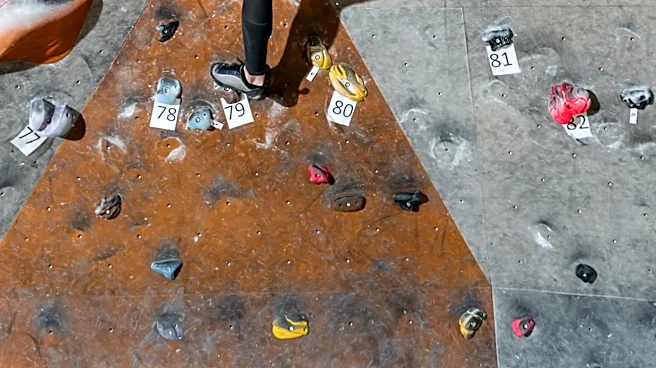
a Bouldering V-Sum once a week. This protocol is designed to simultaneously improve climbing fitness, including finger and grip strength, and technique. Additionally, incorporating Campus Board intervals is suggested as a highly efficient method for enhancing finger strength and strength endurance, which are considered the most crucial fitness attributes for rock climbing and bouldering. These intervals typically involve 6-10 rounds of one minute on and one minute rest, with difficulty adjustable by varying rung size. MTI emphasizes that tactical officers should prioritize job-specific training and maintain a lean body weight with high relative strength, ensuring that bouldering complements rather than replaces their core professional fitness requirements. Bouldering activities can be scheduled as a second daily session or on off-training days.
Why It's Important?
Integrating bouldering training for tactical police officers holds significant importance for several reasons. Firstly, it directly enhances critical physical attributes like finger and grip strength, strength endurance, and overall body control, which are highly transferable to operational demands. These capabilities can be crucial in situations requiring officers to climb, pull themselves over obstacles, or maintain a strong grip in challenging environments. Secondly, bouldering improves problem-solving skills and mental focus under physical stress, as climbers must strategize routes and execute precise movements. This mental acuity can translate to better decision-making in high-pressure tactical situations. Thirdly, by offering a unique and engaging form of physical activity, bouldering can serve as an effective cross-training method, preventing burnout from repetitive job-specific exercises and promoting overall physical and mental well-being. The emphasis on maintaining a lean body weight and high relative strength aligns with the functional fitness requirements of tactical professions, ensuring that officers remain agile and efficient.
What's Next?
Tactical police officers looking to implement bouldering into their regimen should first ensure their job-specific training is met. Following MTI's advice, they can then incorporate a weekly Bouldering V-Sum and Campus Board intervals. This will require access to a bouldering gym or a home setup with a campus board. Officers should focus on gradually increasing the difficulty of their bouldering sessions, either by attempting harder V-Sum problems or by using smaller rungs on the campus board. It is also crucial to monitor body weight and nutrition to maintain optimal relative strength. Collaboration with fitness professionals who understand both tactical training and climbing mechanics could further optimize individual programs. As bouldering's benefits become more recognized within tactical communities, there may be a trend towards more formalized integration of such activities into departmental fitness guidelines or specialized training programs, potentially leading to improved physical readiness and operational effectiveness for officers.
Beyond the Headlines
Beyond the immediate physical benefits, the integration of bouldering for tactical police officers touches upon deeper aspects of human performance and resilience. Bouldering, by its nature, demands a high degree of self-awareness, body control, and the ability to manage fear and discomfort. These psychological attributes are invaluable for tactical professionals who frequently operate in unpredictable and high-stakes environments. The sport's emphasis on continuous problem-solving and adapting to new challenges can foster a growth mindset, encouraging officers to constantly seek improvement and develop innovative solutions. Furthermore, the non-traditional nature of bouldering as a fitness activity can provide a mental escape and a source of enjoyment, contributing to overall stress reduction and mental well-being, which are critical for individuals in demanding professions. This approach highlights a holistic view of tactical readiness, recognizing that peak performance is not solely about brute strength but also about mental agility, emotional regulation, and a sustained passion for physical challenge.