

What's Happening?
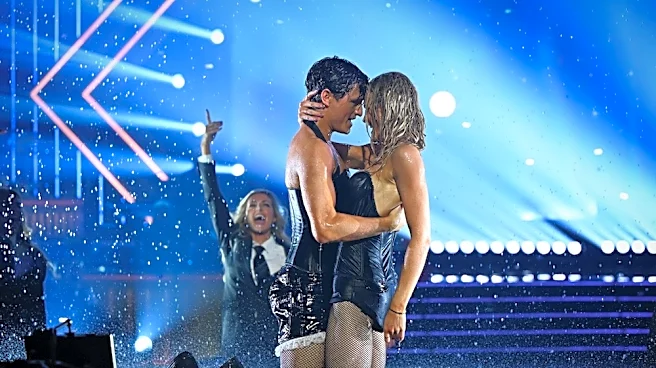
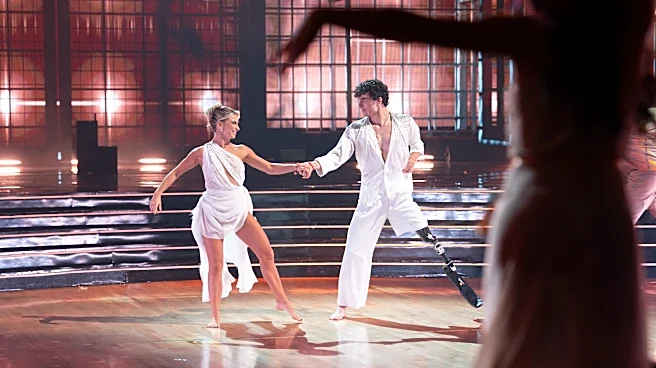
Julianne Hough, cohost of 'Dancing With the Stars,' has responded to criticism regarding her fashion choices during Season 35 of the show. In an interview published on November 24, Hough, alongside her stylist Brad Goreski, discussed her approach to style
this season. She stated that as she enters her late 30s, her fashion decisions are driven by personal preference and what makes her feel 'incredible,' rather than conforming to current trends. Hough described this period as her 'leading lady era,' reflecting both her professional projects and personal identity. She noted a deliberate shift towards a more 'vixen-y' style this season, moving away from her previous 'girl next door' image, as part of a strategic effort to define her cohosting persona.
Why It's Important?
This development highlights the scrutiny public figures, particularly those in entertainment, face regarding their appearance and personal choices. Hough's comments reflect a broader trend of individuals in the public eye asserting their autonomy over personal style and image, pushing back against external expectations. For 'Dancing With the Stars,' the cohost's fashion choices contribute to the show's overall aesthetic and public perception, potentially influencing viewership and audience engagement. The discussion around Hough's style also underscores the evolving nature of celebrity image management and the increasing emphasis on authenticity and self-expression in the entertainment industry. This can resonate with audiences who value genuine self-representation over manufactured celebrity personas.
What's Next?
As 'Dancing With the Stars' continues, Julianne Hough's fashion choices will likely remain a topic of discussion among viewers and entertainment commentators. Her stated intention to maintain a more 'vixen-y' and personally driven style suggests that future appearances will continue to reflect this approach. This could lead to ongoing conversations about celebrity fashion, self-expression, and the role of cohosts in shaping a show's visual identity. The show's producers and Hough herself may continue to leverage these discussions as part of their engagement strategy, potentially influencing future styling decisions or public relations narratives surrounding her role on the program. The broader entertainment industry may also observe how such personal branding impacts audience reception and career trajectory.
Beyond the Headlines
The discourse surrounding Julianne Hough's fashion choices touches upon deeper cultural conversations about ageism and gender expectations in the entertainment industry. Her assertion of personal style in her late 30s challenges conventional notions of how women in the public eye should dress as they age. This move towards self-defined style, rather than adhering to external pressures, can be seen as a form of empowerment. It also reflects a shift in audience expectations, where authenticity and individuality are increasingly valued over adherence to traditional celebrity aesthetics. This trend could encourage other public figures to embrace more personal and less conventional styles, potentially leading to a more diverse and representative range of fashion expressions in mainstream media.