







What's Happening?
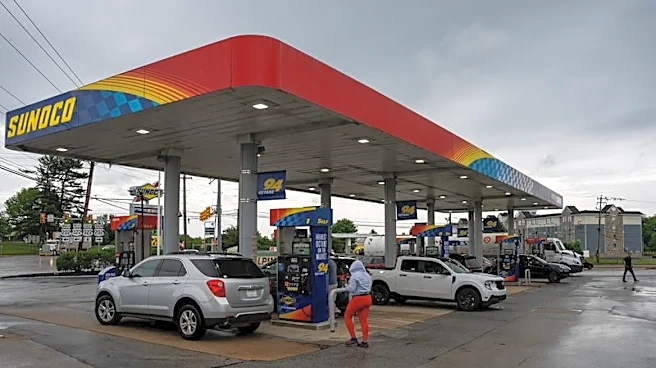
Kalshi traders are forecasting a significant rise in U.S. gas prices, predicting a 93% chance that prices will exceed $4 per gallon by the end of July. This prediction comes as the national average gas price stands at $3.89, according to AAA. The speculation
is influenced by the recent escalation in U.S.-Iran tensions, with the U.S. resuming military strikes against Iran. These actions are aimed at degrading Iranian military capabilities in the Strait of Hormuz, a critical passage for global oil shipments. Concurrently, oil prices have been on the rise, with U.S. West Texas Intermediate futures closing at $79.60 per barrel and Brent crude at $84.95 per barrel.
Why It's Important?
The potential increase in gas prices could have widespread economic implications, affecting both consumers and businesses across the U.S. Higher fuel costs can lead to increased transportation and production expenses, which may be passed on to consumers, contributing to inflationary pressures. The geopolitical tensions in the Middle East, particularly involving a key oil transit route, underscore the vulnerability of global energy markets to political instability. This situation highlights the interconnectedness of international relations and domestic economic conditions, with potential ripple effects on consumer spending and economic growth.
What's Next?
If the U.S.-Iran conflict continues to escalate, further disruptions in oil supply could exacerbate the rise in gas prices. Stakeholders, including policymakers and industry leaders, may need to consider strategic responses to mitigate the impact on the economy. This could involve exploring alternative energy sources or implementing measures to stabilize fuel prices. Additionally, the situation may prompt discussions on energy security and the need for diversified energy strategies to reduce reliance on volatile regions.