



What's Happening?
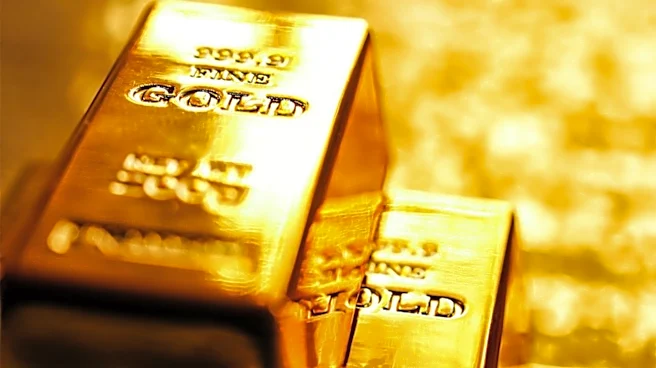
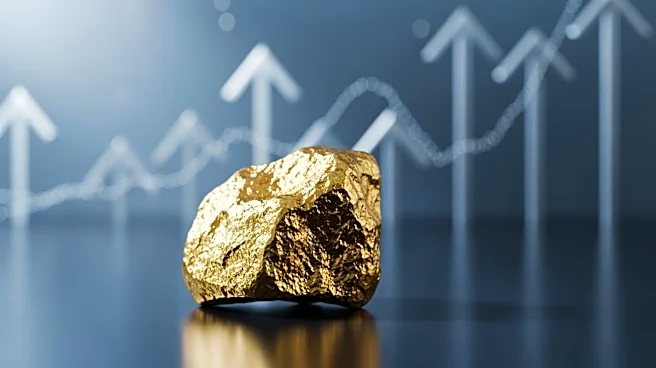
Gold prices have recently fallen to approximately $4,000 per ounce, marking a significant downturn that has led major financial institutions to revise their previously optimistic forecasts. This decline follows a two-year rally where gold prices more
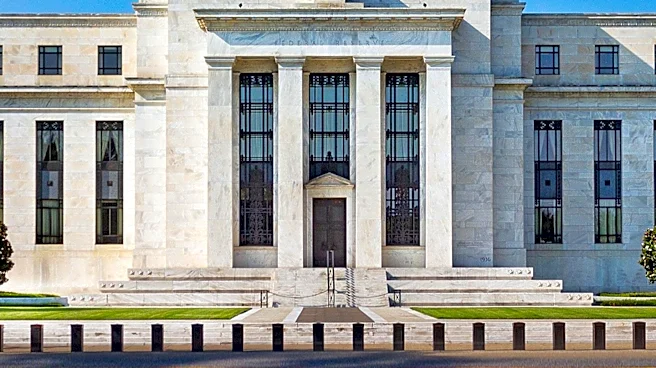
than doubled, reaching an intraday high of nearly $5,600 in January 2026. The current sell-off is attributed to a stronger U.S. dollar and expectations that the Federal Reserve will maintain or increase interest rates, which diminishes the appeal of gold as a non-yielding asset. ING and Deutsche Bank have both lowered their gold price forecasts for the third and fourth quarters of 2026, citing higher bond yields and reduced investor demand as contributing factors. Similarly, Goldman Sachs has adjusted its year-end target for gold, reflecting a shift in market sentiment.
Why It's Important?
The adjustment in gold price forecasts by major banks highlights a significant shift in market dynamics, influenced by macroeconomic factors such as interest rates and currency strength. As gold is traditionally seen as a safe-haven asset, its declining appeal suggests a broader confidence in yield-bearing investments amid expectations of sustained higher interest rates. This shift could impact investors who rely on gold for portfolio diversification and risk management. Additionally, the reduced demand from key markets like China and India, along with softer investment from exchange-traded funds, underscores a potential change in global economic sentiment and investment strategies.
What's Next?
Looking ahead, the gold market may continue to experience volatility as financial institutions and investors adjust to the evolving economic landscape. The Federal Reserve's monetary policy decisions will likely play a crucial role in shaping future gold prices. If interest rates remain high or increase further, gold may face continued pressure. Conversely, any signs of economic instability or geopolitical tensions could renew interest in gold as a safe-haven asset. Market participants will be closely monitoring these developments to adjust their strategies accordingly.