






What's Happening?
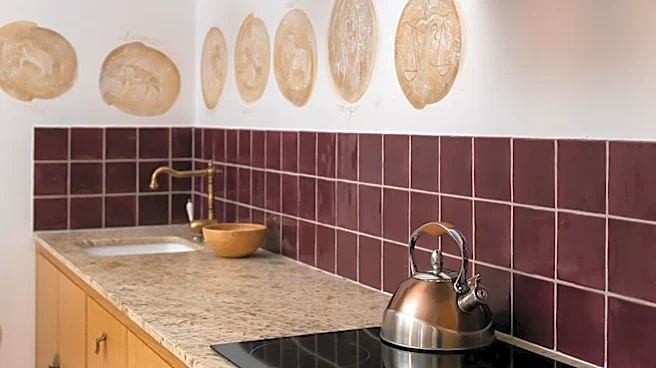
Designer Claire Thomas has completed a six-month renovation of the kitchen in her 1930s Spanish Colonial home in Claremont, California, known locally as the Ficker House. The original kitchen had been partially updated in the 1990s with granite countertops
and cabinetry that did not align with the home's historic character. Thomas aimed to revamp the space to honor its origins without creating a historically accurate time capsule. She drew inspiration from Frank Lloyd Wright’s Ennis House in Los Angeles, specifically its restrained, off-white and black tiled kitchen, which she noted was common in Los Angeles homes of the 1920s and 1930s, regardless of architectural style. The renovated kitchen features a crisp palette of cream and graphite, custom tile mosaics, and unlacquered brass fixtures, blending historical dialogue with modern functionality.
Why It's Important?
This renovation highlights a growing trend in historic home preservation and modernization, where designers seek to integrate contemporary living with architectural heritage. Thomas's approach demonstrates how to respect a home's past while adapting it for modern use, avoiding strict historical replication in favor of a design that feels authentic to the period's broader aesthetic trends. This project could influence homeowners and designers working with historic properties, encouraging them to look beyond a single architectural style for inspiration and to consider the broader design context of an era. It also showcases how thoughtful material choices and design elements, such as custom tile work and concealed modern appliances, can create a cohesive and timeless space that enhances both functionality and aesthetic appeal.
What's Next?
The successful integration of Art Deco elements into a Spanish Colonial home may inspire further exploration of cross-architectural design influences in residential renovations. This project could serve as a case study for design professionals and homeowners interested in blending historical accuracy with personal style and modern conveniences. The detailed approach to concealing contemporary appliances and utilizing period-appropriate materials, while still ensuring functionality, might become a more widely adopted practice in high-end renovations. Furthermore, the project's emphasis on creating a 'narrative sense' within the home could encourage a more holistic and story-driven approach to interior design, where each space contributes to the overall historical and personal context of the residence.
Beyond the Headlines
Beyond its aesthetic appeal, this renovation touches upon the broader cultural value of preserving and reinterpreting historical architecture. Thomas's philosophy—that a house is not a museum but should be in dialogue with its past—reflects a contemporary understanding of heritage that values evolution over rigid preservation. This approach allows for personal expression and modern living within historic structures, ensuring their continued relevance and usability. The project also subtly critiques the often-disjointed updates of previous decades, like the 1990s granite countertops, by demonstrating how a more thoughtful, era-conscious renovation can create a more harmonious and enduring design. It underscores the idea that good design is timeless and can bridge different historical periods effectively.