




What's Happening?
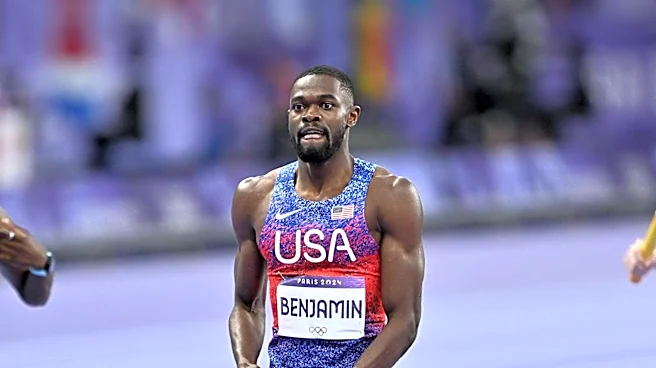
Rai Benjamin, a prominent American track and field athlete, is setting his sights on the 2028 Los Angeles Olympics with the ambitious goal of securing consecutive gold medals in the 400m hurdles. This achievement would make him only the second man in history
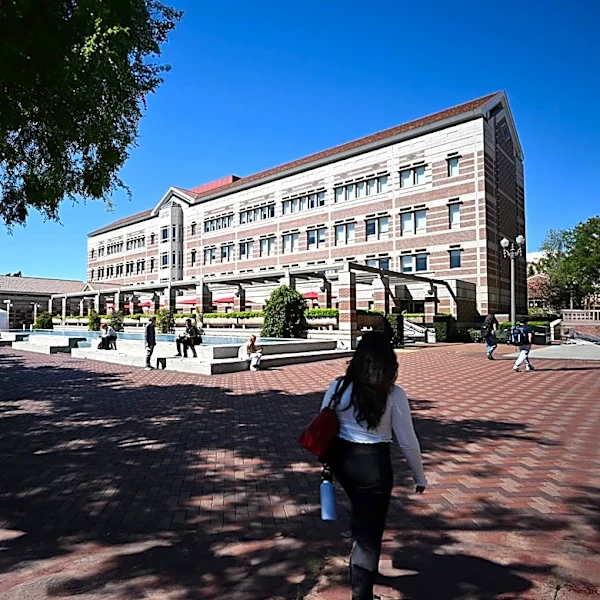
to accomplish such a feat, following American Glenn Davis's wins in 1956 and 1960. Benjamin is currently training at UCLA under the guidance of Joanna Hayes, an Olympic gold medalist herself. Notably, UCLA's campus is designated to serve as the Olympic village for the 2028 Games, potentially offering Benjamin a unique 'home-field' advantage. His preparation includes a strategic focus on enhancing his flat 400m speed, a move he believes will give him a physical edge over competitors. Benjamin recently demonstrated this improved speed by running a personal best of 43.83 seconds in the flat 400m, showcasing his versatility and dedication to pushing the boundaries of his performance. This period marks a critical phase in his career as he aims to solidify his legacy in the sport.
Why It's Important?
Rai Benjamin's pursuit of a second consecutive Olympic gold medal in the 400m hurdles carries significant importance for U.S. track and field and the broader sports landscape. Achieving this rare feat would elevate his status to one of the all-time greats in the event, drawing considerable national attention to the sport ahead of the Los Angeles Games. His training at UCLA, which will host the Olympic village, creates a compelling narrative and could inspire local athletes and fans. Furthermore, Benjamin's strategic decision to focus on improving his flat 400m speed highlights an evolving approach to hurdles training, potentially influencing future generations of athletes and coaching methodologies. His success could also boost the profile of track and field in the U.S., attracting more viewership and participation, especially as the country prepares to host the Olympics. The rivalry among Benjamin, Norway’s Karsten Warholm, and Brazil’s Alison dos Santos has already pushed the event to unprecedented levels, making Benjamin's continued quest for dominance a key storyline for American sports enthusiasts.
What's Next?
Looking ahead, Rai Benjamin will continue his rigorous training regimen at UCLA, with a primary focus on refining his 400m hurdles technique while integrating his newly enhanced flat speed. The immediate future will likely involve participation in various Diamond League meets and other international competitions throughout 2027 to fine-tune his race rhythm and strategy. These events will serve as crucial testing grounds against his main rivals, Karsten Warholm and Alison dos Santos, as he aims to reclaim the top spot and potentially break the world record. As the 2028 Los Angeles Olympics draw closer, Benjamin's performance in these lead-up events will be closely watched, shaping expectations for his bid for back-to-back gold medals. His journey will also involve managing the physical demands of elite competition and maintaining peak performance leading into the home-soil Olympic Games, where he will be a central figure for the U.S. track and field team.
Beyond the Headlines
Beyond the immediate goal of Olympic gold, Rai Benjamin's journey reflects deeper themes within elite athletics, including the relentless pursuit of perfection and the psychological demands of competing at the highest level. His strategic shift to improve his flat 400m speed underscores a modern trend in track and field where athletes are increasingly cross-training and adapting their approaches to gain marginal advantages. This evolution challenges traditional training paradigms and highlights the scientific advancements in sports performance. Furthermore, Benjamin's desire to break the world record and set a mark that is 'out of reach' speaks to the enduring human drive to leave an indelible legacy. His story also touches on the unique pressures and opportunities that come with competing in a 'hometown' Olympics, potentially amplifying both the stakes and the inspiration for athletes and the public alike. His career trajectory could serve as a case study for future athletes on how to adapt, innovate, and sustain excellence in a highly competitive global sport.