





What's Happening?
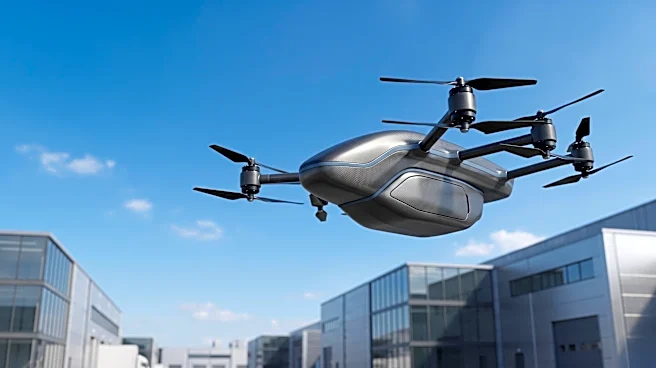
Velo X Aerospace, a Michigan-based company founded in 2023, has unveiled the concept design for its Velocitor X-C, an uncrewed air cargo eVTOL (electric Vertical Take-Off and Landing) multicopter. This concept aircraft is designed for full autonomous
piloting and features a LiDAR obstacle warning and avoidance system (LOWAS). The Velocitor X-C is estimated to have a cruise speed of 70 mph (113 km/h) and an expected flight time of 45 minutes, with a maximum payload capacity of 280 lb (127 kg). The multicopter is powered by eight electric motors and battery packs, with its fuselage constructed from carbon fiber composite for a high strength-to-weight ratio. The company foresees its use in industrial and commercial air cargo transportation, emergency medical supplies, battlefield resupply, and security air patrols, with the capability to be outfitted with various cameras or sensors.
Why It's Important?
The introduction of the Velocitor X-C concept by Velo X Aerospace highlights the growing innovation in the autonomous air cargo sector within the U.S. This development is significant for several reasons: it addresses the increasing demand for rapid and efficient logistics solutions, particularly in urban and remote areas. The autonomous piloting and LOWAS system promise enhanced safety and operational efficiency, reducing the need for human intervention and potentially lowering operational costs. The carbon fiber composite fuselage contributes to the aircraft's lightweight design, maximizing payload capacity and flight performance. Its diverse potential applications, from commercial delivery to emergency medical transport and defense, underscore the versatility and transformative potential of uncrewed eVTOL technology. This advancement could alleviate ground traffic congestion, provide faster delivery times for critical goods, and offer new capabilities for defense and security operations, thereby impacting various U.S. industries and public services.
What's Next?
As a concept design, the next steps for Velo X Aerospace will involve moving from theoretical design to prototype development and rigorous testing. This will include detailed engineering, component manufacturing, and initial flight tests to validate the aircraft's performance, safety features, and autonomous capabilities. The company will likely seek further funding rounds to support these development phases. Certification from aviation authorities will be a critical milestone, requiring extensive data collection and adherence to stringent safety standards for uncrewed aerial vehicles. Velo X Aerospace will also need to establish partnerships for manufacturing and operational deployment, particularly for specialized applications like medical supplies or defense. The successful realization of the Velocitor X-C will depend on overcoming technical challenges related to battery life, payload integration, and the development of robust air traffic management systems for autonomous operations.
Beyond the Headlines
The Velocitor X-C concept points to a future where autonomous aerial logistics could become a commonplace aspect of daily life and critical operations. Beyond its immediate applications, the development of such uncrewed eVTOLs raises broader implications for urban infrastructure, labor markets, and regulatory frameworks. The widespread adoption of autonomous air cargo could necessitate the creation of dedicated air corridors and landing zones, transforming urban landscapes. It could also lead to new job categories in drone maintenance, data analysis, and remote operation, while potentially displacing traditional ground-based delivery roles. Ethically, the use of autonomous systems for critical functions like emergency medical supplies or defense raises questions about accountability, decision-making in unforeseen circumstances, and cybersecurity. The success of the Velocitor X-C and similar projects will depend not only on technological prowess but also on public acceptance, robust regulatory oversight, and a clear understanding of its societal impact.