
What's Happening?
The U.S. government and industry experts are emphasizing the importance of recycling rare earth elements to secure the critical mineral supply chain. Rare earths, essential for modern technologies like
smartphones and wind turbines, are mostly lost when products reach the end of their life. Julie Klinger, a professor at the University of Wisconsin–Madison, highlights that less than 1% of consumed rare earths are recycled, leading to accumulation in waste. Efforts to scale up recycling are underway, with companies like MP Materials and Apple collaborating to create a closed-loop supply chain. This involves recycling end-of-life products to recover rare earths, which are then used in new products. The initiative aims to reduce dependence on foreign sources and enhance supply chain security.
Why It's Important?
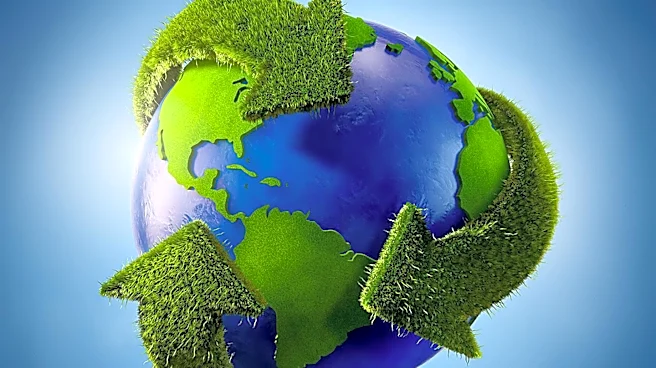
Recycling rare earth elements is crucial for reducing the U.S.'s reliance on foreign sources, particularly China, which dominates the rare earth market. By developing a domestic recycling infrastructure, the U.S. can enhance its supply chain security and support the defense and technology industries. The initiative also presents an environmentally friendly alternative to mining, as recycling involves known quantities and expected environmental impacts. This shift towards a circular economy could transform how critical materials are sourced, potentially leading to more sustainable manufacturing practices and economic stability.
What's Next?
The collaboration between MP Materials and Apple is a significant step towards establishing a robust recycling system for rare earths in the U.S. As these efforts progress, other companies may follow suit, further strengthening the domestic supply chain. The success of these initiatives could prompt policy changes to support recycling infrastructure and encourage more companies to adopt similar practices. Additionally, advancements in recycling technology could make the process more efficient and cost-effective, further incentivizing its adoption.