







What's Happening?
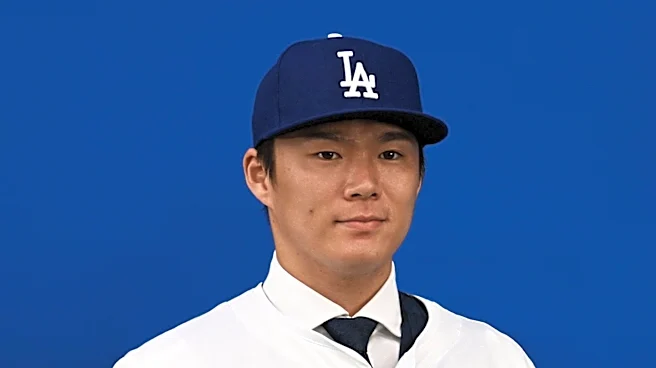
Los Angeles Dodgers star pitcher Yoshinobu Yamamoto, who has exceeded expectations since joining MLB from Japan, is poised to become a significant factor in future contract negotiations. Yamamoto, considered one of MLB's top pitchers, has largely maintained
his health, with only one injured list stint for a right rotator cuff strain that showed no structural damage. His current 12-year, $325 million contract includes an opt-out clause after the 2029 season. If he exercises this option, he could seek an even larger deal, potentially becoming the first pitcher to command $500 million or even $600 million. This scenario will unfold three seasons into the new Collective Bargaining Agreement (CBA) and its free-agent rules, which could make it challenging for the Dodgers to accommodate another massive contract, given their existing financial commitments. The potential for such a record-breaking deal for Yamamoto also provides the players' association with strong evidence to support arguments for a spending cap in future CBA negotiations.
Why It's Important?
The potential for Yoshinobu Yamamoto to opt out of his contract and seek a deal upwards of $500 million has significant implications for MLB's economic landscape and team spending strategies. Such a contract would set a new benchmark for pitcher salaries, potentially escalating player demands across the league. For the Los Angeles Dodgers, retaining Yamamoto would require substantial financial maneuvering, possibly involving salary shedding, especially if a salary cap is implemented under the new CBA. This situation highlights the ongoing tension between player compensation and team financial flexibility, a core issue in collective bargaining. The players' association could leverage Yamamoto's market value as a prime example of why a spending cap might be necessary to ensure competitive balance, or conversely, why players deserve to maximize their earnings in an uncapped environment. The outcome of Yamamoto's future contract negotiations could therefore influence the structure of future CBAs and the financial strategies of all MLB teams.
What's Next?
Yoshinobu Yamamoto's contract situation will come to a head after the 2029 season when his opt-out clause becomes active. Leading up to this, the ongoing negotiations for the new Collective Bargaining Agreement will be crucial, as any changes to free-agent rules or the potential implementation of a salary cap could directly impact his market value and the Dodgers' ability to retain him. If a salary cap is put in place, the Dodgers may need to strategically manage their payroll to create space for a new, potentially record-setting contract for Yamamoto. Conversely, if no cap is established, the bidding war for his services could intensify, pushing his value even higher. Yamamoto's continued performance and health will also be key factors, as sustained elite play will strengthen his position for a historic deal. The Dodgers are expected to prioritize keeping him in Los Angeles, but the financial implications and the evolving CBA landscape will dictate the complexity of these future negotiations.
Beyond the Headlines
The potential for Yoshinobu Yamamoto to sign a contract exceeding $500 million extends beyond mere financial figures, touching upon deeper ethical and cultural dimensions within professional sports. Such a deal would not only redefine player valuation in MLB but also intensify debates about wealth distribution in sports and the sustainability of ever-increasing player salaries. It could further highlight the growing disparity between large-market and small-market teams, potentially leading to calls for more robust revenue-sharing mechanisms or stricter salary controls to maintain competitive balance. The narrative around Yamamoto's contract could also influence how international players are valued and integrated into U.S. sports leagues, potentially encouraging more aggressive recruitment and higher initial investments in global talent. Furthermore, the discussion around his health and the long-term risks associated with pitching, such as Tommy John surgery, underscores the immense physical demands placed on elite athletes and the financial implications of their careers.