





What's Happening?
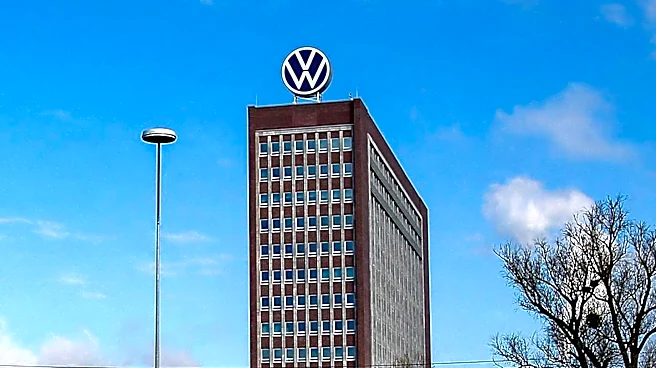
Volkswagen Group, one of the world's largest automakers, owns ten unique automotive brands, including Audi. Audi has been a wholly-owned subsidiary of Volkswagen since the mid-1960s. Despite this close corporate relationship, and the fact that Audi and Volkswagen vehicles
often share significant mechanical components like the MQB platform and the EA888 2.0-liter turbocharged four-cylinder engine, they maintain separate dealership and service department networks in North America. While some Volkswagen dealers may advertise their ability to service Audis, particularly for routine maintenance, warranty or recall work typically requires an authorized Audi dealer. This distinction is partly due to Audi being positioned as a higher-tier luxury brand, similar to the relationship between Toyota and Lexus, which often results in higher parts and labor rates at Audi service departments compared to Volkswagen ones.
Why It's Important?
This operational structure has several implications for U.S. consumers and the automotive service industry. For Audi owners, it means that while their vehicle might share underlying technology with a Volkswagen, the service experience and associated costs are distinct. The requirement to visit authorized Audi dealerships for warranty and recall work ensures specialized expertise and genuine parts, but it can also limit service options and potentially increase repair expenses. For independent repair shops, this separation presents both challenges and opportunities; while they might service common components, access to proprietary diagnostic tools and training for luxury brands can be restricted. This dynamic also highlights the strategic branding efforts within large automotive groups, where shared engineering underpins distinct market positioning and pricing strategies, influencing consumer choices and perceptions of value across different segments of the U.S. automotive market.
What's Next?
The trend of shared platforms and components across different brands within large automotive groups is likely to continue, driven by economies of scale and efficiency. However, the distinct service networks for luxury brands like Audi are also expected to persist, maintaining brand differentiation and premium service offerings. Consumers may see continued efforts by some Volkswagen dealerships to attract Audi owners for non-warranty services, leveraging the mechanical similarities. Conversely, Audi dealerships will likely emphasize their specialized expertise and exclusive services to justify higher costs. The evolution of electric vehicles and advanced driver-assistance systems may further complicate service requirements, potentially leading to even more specialized training and equipment, reinforcing the need for brand-specific service centers for complex repairs and software updates. This could further solidify the separation in service networks, even as underlying technologies converge.
Beyond the Headlines
The relationship between Audi and Volkswagen dealerships in the U.S. goes beyond mere service logistics; it reflects a broader strategy of market segmentation and brand management within a corporate conglomerate. By positioning Audi as a luxury brand with its own dedicated service infrastructure, Volkswagen Group aims to capture different consumer demographics and price points. This strategy allows the company to maximize its market reach and profitability by offering a spectrum of products from mass-market to premium. The shared mechanical components, while efficient for manufacturing, also raise questions about the true value proposition of luxury branding when core technologies are identical. This dynamic influences consumer psychology, where perceived exclusivity and specialized service contribute significantly to a brand's premium status, even if the underlying engineering is shared. It also underscores the power of branding in shaping consumer expectations and willingness to pay for differentiated experiences.