



What's Happening?
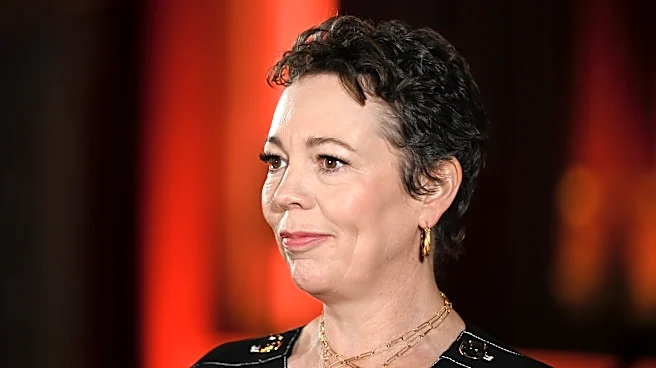
Olivia Colman, the acclaimed actress, walked the runway for Miu Miu's Spring/Summer 2027 show during Paris Fashion Week. Her appearance is highlighted as a significant moment for age inclusivity in the fashion industry, which has historically favored
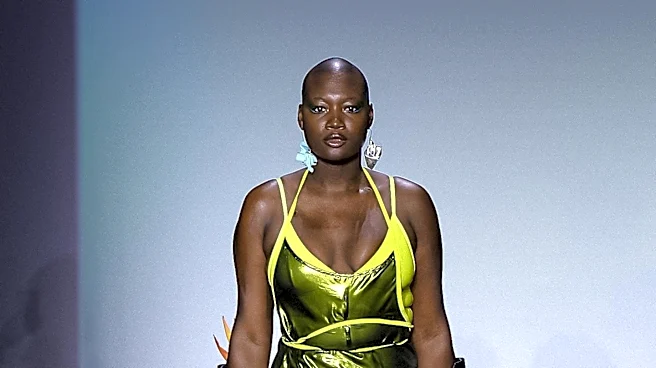
youth and specific body types. Colman, described as refreshingly non-sample-sized and unattached to social media, is seen as rewriting the rules of what a 'fashion girl' looks like. This event is part of a broader cultural shift where women over 40 are gaining more visibility and celebration in fashion campaigns and shows, moving away from past trends that focused on specific demographics like 'Brazilian model craze' or 'Insta-It girls.' The industry is increasingly featuring diverse ages, body types, and races, although progress has sometimes been inconsistent.
Why It's Important?
Colman's participation in a high-profile fashion show underscores a growing movement towards greater representation and inclusivity within the fashion industry. This shift challenges long-standing beauty standards that have often excluded women over a certain age, promoting a more realistic and diverse portrayal of consumers. For U.S. consumers, this could lead to a wider range of fashion choices and marketing that resonates with a broader demographic, potentially increasing engagement and sales among older women who feel more represented. The move also reflects a societal pushback against ageism, suggesting that relevance and style are not limited by age. This could influence other industries to adopt more inclusive marketing strategies, recognizing the purchasing power and cultural influence of older demographics.
What's Next?
The trend of age inclusivity in fashion, exemplified by Olivia Colman's runway appearance, is expected to continue influencing future collections and campaigns. Fashion houses may increasingly feature models of various ages, body types, and backgrounds to appeal to a wider consumer base and align with evolving societal values. This could lead to more diverse representation in advertising and editorial content, further normalizing the presence of older women in high fashion. The success of such initiatives may also encourage other industries, particularly those focused on lifestyle and beauty, to re-evaluate their marketing approaches to better reflect and celebrate age diversity. The long-term impact could be a sustained shift in how beauty and relevance are defined across various cultural sectors.
Beyond the Headlines
The embrace of age inclusivity in fashion, as demonstrated by Olivia Colman, carries deeper implications beyond mere aesthetics. It challenges the pervasive cultural narrative that equates youth with beauty and relevance, potentially fostering a more positive perception of aging. This development could empower women to feel more confident and visible at all stages of life, reducing the pressure to conform to unrealistic beauty standards. Ethically, it promotes a more responsible and representative industry that acknowledges the diversity of its audience. Legally, while not directly impacting legislation, it could contribute to a broader societal dialogue that eventually influences anti-discrimination efforts based on age. Culturally, it signifies a move towards a more inclusive and accepting society where diverse forms of beauty are celebrated.