









What's Happening?
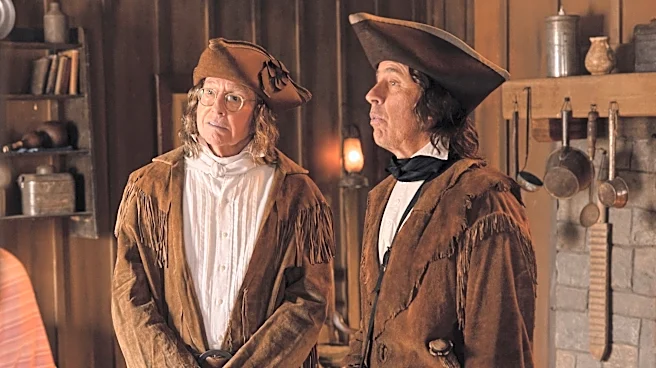
Larry David's latest television project, 'Life, Larry and the Pursuit of Unhappiness,' has been met with criticism for its lack of originality and comedic impact. The show, consisting of seven half-hour episodes, features David in various historical sketches,
reprising his familiar comedic style from 'Curb Your Enthusiasm.' The series includes sketches set in different historical contexts, such as the Continental Congress and the McCarthy hearings, but has been criticized for relying heavily on familiar material and failing to deliver fresh humor. Despite the presence of notable guest stars like Jerry Seinfeld, the show has been described as a 'shambles' that depends on nostalgia rather than innovative comedy.
Why It's Important?
The reception of 'Life, Larry and the Pursuit of Unhappiness' highlights the challenges faced by established comedians in maintaining relevance and originality in their work. Larry David, known for his sharp wit and unique comedic voice, faces the risk of alienating audiences if his new projects do not meet the high expectations set by his previous successes. This situation underscores the broader issue of creative stagnation in the entertainment industry, where established figures may struggle to innovate while staying true to their comedic roots. The show's reliance on nostalgia rather than fresh content could impact its success and influence future projects by similar creators.
What's Next?
The mixed reception of 'Life, Larry and the Pursuit of Unhappiness' may prompt Larry David and his team to reassess their creative approach for future projects. Feedback from audiences and critics could lead to adjustments in the show's format or content if additional episodes are planned. Additionally, the show's performance could influence the strategies of other comedians and producers in the industry, encouraging them to prioritize originality and innovation in their work. The response to this series may also affect the involvement of high-profile guest stars in similar projects, as they evaluate the potential impact on their own reputations.
Beyond the Headlines
The show's reception raises questions about the role of nostalgia in contemporary entertainment. While nostalgia can be a powerful tool for engaging audiences, over-reliance on past successes may hinder creative growth and innovation. This situation highlights the delicate balance creators must strike between honoring their established style and exploring new comedic territories. Furthermore, the show's historical sketches touch on sensitive topics, such as racism, which require careful handling to avoid perpetuating stereotypes or offending viewers. The criticism of these elements suggests a need for greater sensitivity and awareness in comedic portrayals of historical events.