





What's Happening?
Arizona is promoting its diverse spiritual tourism sites, offering visitors opportunities for peace, contemplation, and self-discovery. The state features a range of locations, from historic chapels and shrines to natural vortexes and ancient petroglyph
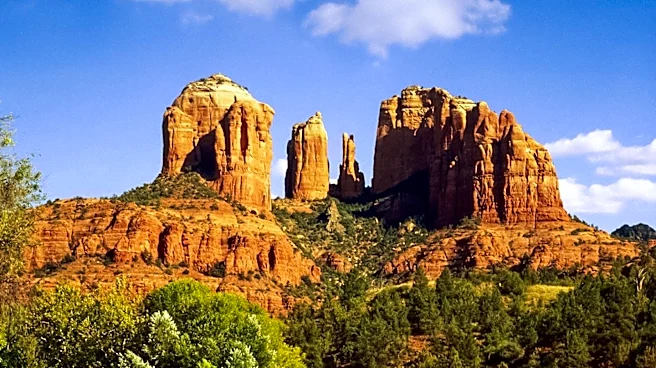
sites. Among the notable destinations is the Chapel of the Holy Cross in Sedona, a distinctive architectural marvel built into red rock formations, offering a meditative oasis. Also in Sedona, the Amitabha Stupa and Peace Park provides a Buddhist site open to all faiths, featuring stupas, prayer wheels, and prayer flags. Yarnell hosts the Shrine of St. Joseph of the Mountains, with life-sized sculptures depicting biblical scenes, created by a World War I veteran. The Crane Petroglyph Heritage Site in Rimrock showcases over 1,000 ancient petroglyphs from the Southern Sinagua people. Sedona is also renowned for its vortex sites, believed to be swirling centers of energy conducive to spiritual healing and meditation, located at scenic spots like Boynton Canyon and Bell Rock. Further south, Tucson is home to the historic Mission San Xavier del Bac, the oldest European structure in Arizona, and the unique El Tiradito Shrine, dedicated to a sinner. Near Hereford, Our Lady of the Sierras features a stone chapel, a large Madonna statue, and a Celtic cross.
Why It's Important?
The emphasis on spiritual tourism in Arizona is important for several reasons, impacting both the state's economy and its cultural identity. Economically, promoting these diverse sites can attract a broader range of tourists, including those seeking wellness, historical, or cultural experiences, thereby boosting local economies through increased visitation to hotels, restaurants, and related businesses. This diversification of tourism offerings can provide a more resilient tourism sector, less reliant on traditional attractions. Culturally, highlighting these spiritual sites preserves and celebrates Arizona's rich historical and spiritual heritage, from indigenous petroglyphs to Spanish colonial missions and modern spiritual centers. It offers an opportunity for visitors to engage with different belief systems and historical narratives, fostering a deeper understanding of the state's past and present. Furthermore, in an increasingly fast-paced world, the promotion of places for peace and contemplation addresses a growing demand for experiences that offer mental and emotional well-being, aligning with broader trends in wellness tourism. This initiative positions Arizona as a destination that caters not only to adventure and scenic beauty but also to personal growth and spiritual enrichment.
What's Next?
Arizona's continued promotion of its spiritual tourism sites will likely involve enhanced marketing campaigns targeting specific demographics interested in wellness, history, and cultural travel. This could include collaborations with travel agencies specializing in spiritual retreats and cultural tours, as well as increased digital presence through travel blogs and social media. Local communities around these sites may see further development of infrastructure to accommodate more visitors, such as improved access, interpretive centers, and local guide services. There may also be efforts to integrate these spiritual journeys with other forms of tourism, creating comprehensive travel packages that combine spiritual exploration with outdoor activities or culinary experiences. Additionally, as interest grows, there could be increased focus on the preservation and maintenance of these historical and natural sites, ensuring their accessibility and integrity for future generations. Educational programs and events could also be developed to deepen visitors' understanding of the cultural and spiritual significance of each location, further enriching the visitor experience.
Beyond the Headlines
The focus on spiritual tourism in Arizona extends beyond mere economic or cultural benefits, touching upon deeper societal trends and individual needs. In an era marked by increasing stress and a search for meaning, the appeal of places offering peace, contemplation, and self-discovery is significant. These sites, whether ancient petroglyphs or modern chapels, provide spaces for introspection and connection, catering to a universal human desire for spiritual engagement, regardless of specific religious affiliation. The concept of "vortexes" in Sedona, for instance, taps into a growing interest in New Age spirituality and alternative healing practices, reflecting a broader cultural shift towards holistic well-being. Furthermore, the preservation and promotion of sites like the Mission San Xavier del Bac or the Crane Petroglyph Heritage Site highlight the importance of cultural heritage and the stories embedded within landscapes. This initiative implicitly acknowledges the value of intangible heritage—the spiritual and historical narratives that give places meaning—and encourages a form of tourism that is respectful, reflective, and personally transformative, rather than purely recreational. It underscores how travel can serve as a vehicle for personal growth and a deeper understanding of diverse human experiences.