




What's Happening?
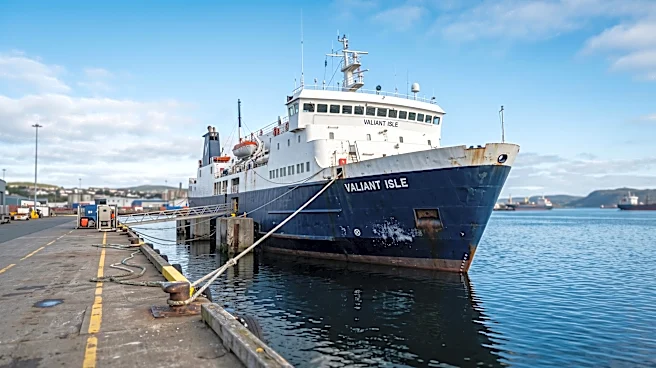
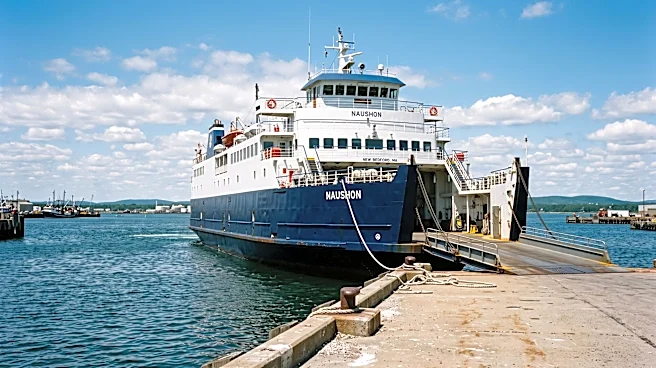
Steamship Authority General Manager Alex Kryska is prioritizing the re-establishment of full passenger, vehicle, and freight ferry service from New Bedford to Martha's Vineyard and Nantucket. This initiative is presented as a solution to persistent traffic
congestion on Cape Cod and a crucial backup in case of disruptions at the Woods Hole or Hyannis terminals. Kryska, who assumed his role in January 2026, has openly stated this as a long-term goal. The concept, while not new, faces historical challenges; previous attempts, such as the Authority's 2001–2003 'Schamonchi' operation, resulted in significant financial losses. Currently, service from New Bedford is limited to seasonal high-speed passenger boats and on-demand freight operations. Kryska intends to commission a new feasibility study to assess the viability of expanding freight, vehicle, and passenger services, acknowledging that any expansion would not occur in the immediate future.
Why It's Important?
The proposed revival of full ferry service from New Bedford carries significant implications for regional transportation, economic development, and community well-being. For South Coast travelers, it could mean shorter drive times to the islands, alleviating the burden of navigating Cape Cod traffic. From a resilience standpoint, a second mainland terminal offers a vital alternative if the primary hubs in Woods Hole or Hyannis face operational issues. However, the initiative also presents challenges. New Bedford officials emphasize the need to protect the city's status as a leading commercial fishing port and an emerging hub for offshore wind staging, ensuring that any new ferry operations do not negatively impact these critical industries. The historical financial losses associated with previous New Bedford ferry services highlight the economic risks, requiring careful consideration of capital costs, operational expenses, and potential revenue streams to avoid the need for subsidies or increased rates.
What's Next?
The immediate next step for the Steamship Authority is to conduct a new feasibility study. This study will thoroughly examine the logistical, financial, and environmental aspects of re-establishing full passenger, vehicle, and freight services from New Bedford. Key considerations will include identifying suitable terminal space that avoids conflict with existing port uses, estimating the substantial capital costs required for pier upgrades, and evaluating the competitiveness of the longer route compared to current operations. Community and environmental approvals will also be critical hurdles. The outcome of this study will determine the concrete timelines and commitments for the project. The Authority's board recently voted to raise fares for 2027 due to rising fuel costs and employee wages, indicating a broader financial context that will influence the viability of new ventures.
Beyond the Headlines
The discussion around reviving New Bedford ferry service extends beyond mere transportation logistics, touching upon deeper issues of regional planning, economic diversification, and environmental stewardship. The push for this service is partly driven by complaints from Woods Hole and Falmouth residents regarding early-morning truck traffic, highlighting the ongoing tension between island accessibility and mainland community impact. The potential for New Bedford to serve as a dual-purpose port—supporting both traditional industries like fishing and emerging sectors like offshore wind, alongside expanded ferry services—represents a complex balancing act. The long-term success of this initiative will depend not only on its economic viability but also on its ability to integrate seamlessly with the existing working waterfront, secure community buy-in, and navigate environmental regulations, ultimately shaping the future of transportation and commerce in the region.