






What's Happening?
Bill Ackman, founder and CEO of Pershing Square, and Chief Investment Officer Ryan Israel, assert that Fannie Mae and Freddie Mac can exit their 18-year conservatorship and relist on the NYSE during President Trump’s second term. This action, they argue,
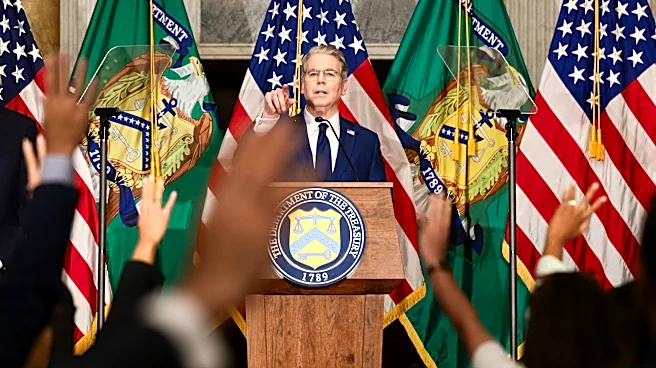
can be achieved through executive authority, bypassing the need for congressional involvement. In a letter to Pershing Square Holdings shareholders, Ackman and Israel outlined a roadmap for this process. The plan involves a new agreement between the Treasury and the Federal Housing Finance Agency (FHFA) to address the repayment or restructuring of Treasury’s senior preferred stock. Subsequently, the Treasury would exercise its warrants to acquire 79.9% of the GSEs’ common shares. The final step would be FHFA approval for Fannie Mae and Freddie Mac to relist on the NYSE as privately owned operating companies. The memo highlights that Treasury Secretary Scott Bessent has indicated the administration will focus on the GSEs' future ownership status in 2027 and 2028.
Why It's Important?
The proposed relisting of Fannie Mae and Freddie Mac carries significant implications for the U.S. housing market, financial sector, and taxpayers. Pershing Square contends that this move would maintain and enhance mortgage affordability while maximizing the long-term value of the American taxpayers’ 79.9% ownership in the two companies. The GSEs currently hold over $200 billion in shareholder equity, with average annual credit losses of only 0.05% over the past decade, indicating robust capital levels. If relisted, these entities could potentially grow their combined capital to over $375 billion within five years. The financial exposure for Pershing Square is substantial, with holdings of approximately 99 million shares of Fannie Mae and 95 million shares of Freddie Mac, valued at $422.5 million and $386.9 million, respectively. A relisting could significantly impact their investment, as share prices previously rose eightfold when such discussions were active.
What's Next?
The immediate next steps would involve the Trump administration, particularly the Treasury and FHFA, initiating discussions and agreements as outlined in Pershing Square's roadmap. Treasury Secretary Scott Bessent's reported focus on the GSEs' future ownership in 2027 and 2028 suggests that this issue will be a priority. Should the administration pursue this path, it would likely involve detailed negotiations between the Treasury and FHFA regarding the restructuring of preferred stock and the exercise of warrants. The FHFA's approval would be crucial for the final relisting on the NYSE. This move could face scrutiny and potential opposition from various stakeholders, including members of Congress who might prefer legislative involvement, and other financial institutions. The market will closely watch for any official statements or actions from the administration regarding the conservatorship status of Fannie Mae and Freddie Mac.
Beyond the Headlines
The potential relisting of Fannie Mae and Freddie Mac through executive authority raises broader questions about the balance of power between the executive branch and Congress in shaping significant economic policy. If successful, it could set a precedent for future administrations to enact major financial reforms without legislative approval, potentially altering the landscape of U.S. governance. Ethically, the move would need to carefully balance the interests of taxpayers, who hold a significant stake, with those of private investors like Pershing Square. The long-term stability of the housing finance system would also be a key consideration, ensuring that the transition to private ownership does not compromise mortgage affordability or market stability. This development could also reignite debates about the role of government-sponsored enterprises in the U.S. economy and the optimal structure for the secondary mortgage market.