







What's Happening?
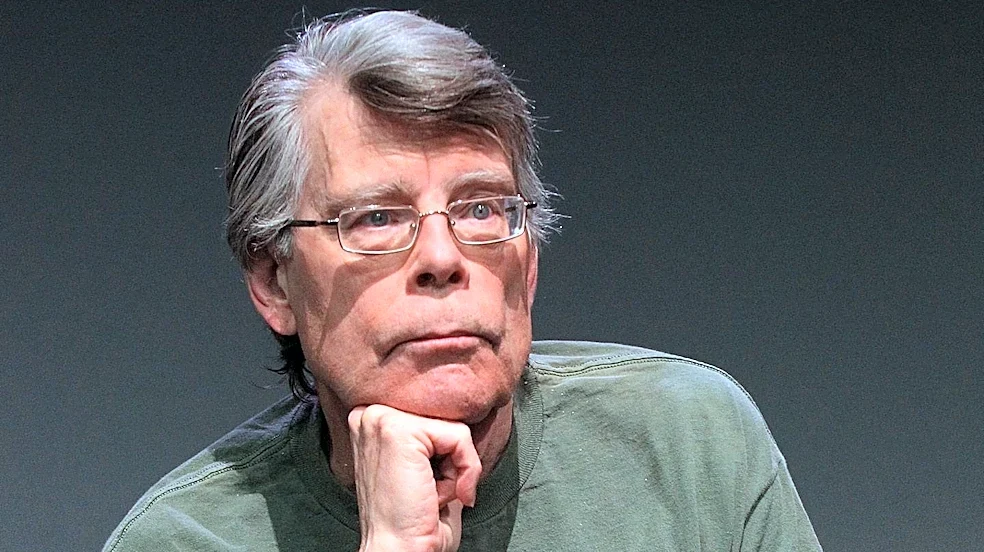
Renowned horror author Stephen King has identified a scene from George A. Romero's 1968 classic 'Night of the Living Dead' as the most terrifying horror sequence he has ever witnessed. King specifically points to the scene where the heroine, Barbara,
is chased back to her car by a lurching zombie in a cemetery. She locks herself in, only to realize her brother has the keys, while the zombie begins to bash a rock against the car window. King describes this scene as having 'reduced me to jelly' upon his first viewing. He often uses his platform to comment on the state of horror, criticizing modern studio productions for relying on cheap shocks rather than the intimate, psychological terror he believes defines true horror, as exemplified by Romero's low-budget masterpiece.
Why It's Important?
Stephen King's endorsement of 'Night of the Living Dead' as a pinnacle of horror is significant because it comes from one of the genre's most influential voices. His analysis underscores a critical distinction between superficial scares and profound, psychological terror, advocating for a deeper understanding of what makes horror effective. King's praise for a low-budget, independent film from 1968 highlights the enduring power of original storytelling and atmospheric tension over expensive special effects. This perspective challenges contemporary Hollywood's tendency to prioritize commercial viability and formulaic approaches in horror, suggesting that true innovation and impact often come from creative constraints. His commentary also reinforces the film's legacy as a groundbreaking work that not only introduced the modern zombie archetype but also explored deeper societal anxieties, making it a timeless piece of cinematic art.
What's Next?
King's continued advocacy for classic horror films like 'Night of the Living Dead' will likely sustain interest in these foundational works, encouraging new generations of filmmakers and audiences to appreciate their artistic merit. His critiques of modern horror productions may prompt ongoing discussions within the industry about the direction of the genre and the balance between commercial appeal and artistic integrity. As King remains a prolific writer and commentator, his opinions will continue to shape perceptions of horror, potentially influencing how future films are conceived and received. The enduring relevance of 'Night of the Living Dead,' nearly six decades after its release, suggests that its themes and techniques will continue to be studied and celebrated as benchmarks for effective horror storytelling.
Beyond the Headlines
Stephen King's appreciation for 'Night of the Living Dead' delves into the philosophical underpinnings of horror, suggesting that the most profound fear arises not from explicit gore, but from the breakdown of familiar reality and the fragility of societal order. His quote, 'What’s behind the door or lurking at the top of the stairs is never as frightening as the door or the staircase itself,' speaks to the power of anticipation and the unknown in generating terror. The film's success, despite its minimal budget, also serves as a powerful example of how artistic vision can transcend financial limitations, proving that genuine creativity can lead to cultural impact. This perspective encourages a deeper examination of the psychological and sociological dimensions of horror, moving beyond surface-level scares to explore the anxieties and vulnerabilities inherent in the human condition and the societal structures we inhabit.