



What's Happening?
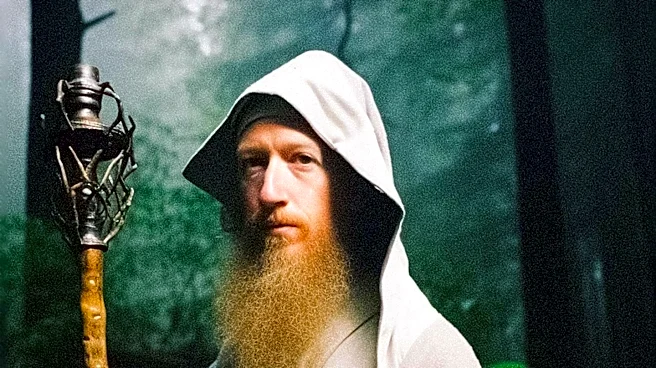
Mount Vernon, Ohio, recently hosted its second annual Middle-Earth March, an event inspired by J.R.R. Tolkien's 'The Lord of the Rings' and 'The Hobbit.' The downtown area was transformed into a Middle-Earth setting, attracting hundreds of attendees dressed
as hobbits, elves, dwarves, and other adventurers. Participating local businesses offered themed activities and experiences, including a Shire Street Fair with an archery range and artists selling Tolkien-inspired goods. A central feature of the event was 'The Hunt for Gollum,' a passport activity where participants searched for nine hidden Gollum figures in downtown businesses to collect stamps for a raffle entry. Additionally, nine optional side quests were available, ranging from 'Frodo Flinger' to 'Smeagol’s Fishing Spot,' and a costume contest was held.
Why It's Important?
This event highlights the growing trend of community-led, themed festivals that leverage popular culture to boost local engagement and economic activity. For Mount Vernon, the Middle-Earth March serves as a significant draw, bringing visitors to downtown businesses and fostering a sense of community. Such events can provide a unique identity for smaller towns, differentiating them in a competitive landscape for tourism and local patronage. The success of a second annual event suggests a sustainable model for cultural tourism, potentially inspiring other communities to explore similar initiatives. It also demonstrates the enduring appeal of classic fantasy literature and its capacity to create shared experiences across different demographics.
What's Next?
Given the success of the second annual Middle-Earth March, it is highly probable that Mount Vernon will continue this tradition in future years, potentially expanding its scope and offerings. Local businesses and organizers may seek to incorporate new elements or partnerships to keep the event fresh and engaging for returning attendees and new visitors. The positive reception could also encourage other towns in the region to develop their own unique themed events, leading to a broader trend of cultural and literary festivals across the U.S. Organizers will likely analyze feedback from this year's event to refine activities and logistics for future iterations, aiming to enhance the overall participant experience.
Beyond the Headlines
Beyond its immediate economic and community benefits, the Middle-Earth March reflects a deeper cultural phenomenon: the power of shared narratives and fictional worlds to unite people. In an increasingly digital and fragmented society, events like this provide tangible, in-person experiences that foster connection and collective imagination. The transformation of a downtown area into a fantasy realm allows participants to temporarily escape everyday life and engage in playful, imaginative activities. This type of immersive event can also contribute to local pride and identity, as residents and visitors alike celebrate a shared appreciation for storytelling and creativity, reinforcing the importance of cultural engagement in community building.