


What's Happening?
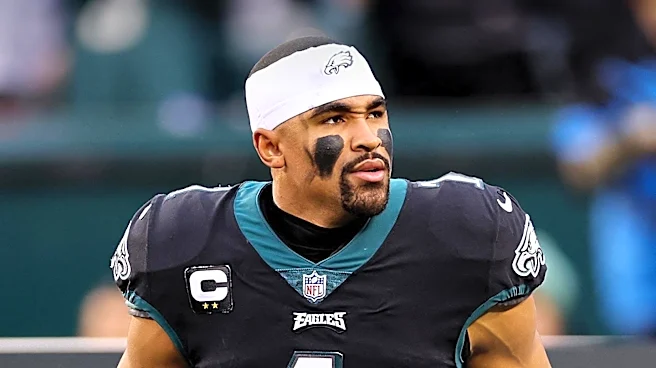
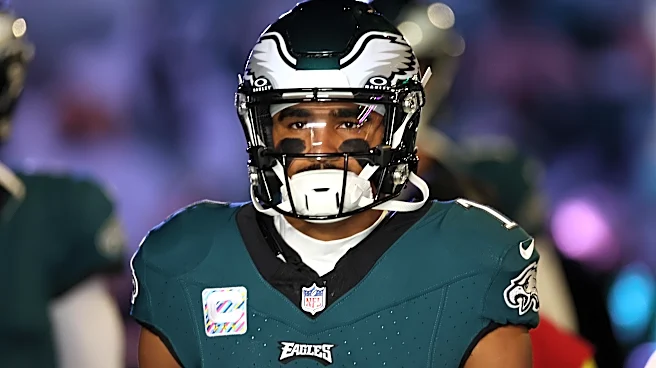
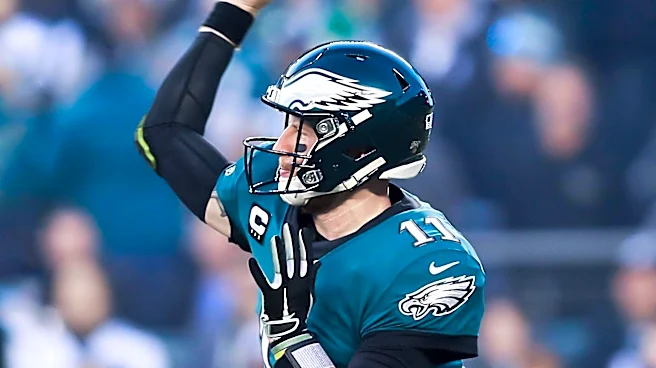
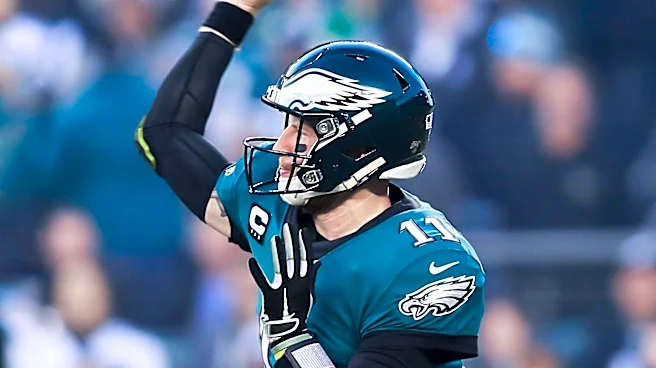
The Philadelphia Eagles are incorporating advanced technology, including helmet cameras and virtual reality (VR) sets, to train their quarterbacks in a new offensive scheme under first-year coordinator Sean Mannion. Rookie quarterback Cole Payton is using
VR to simulate game scenarios and improve his mental visualization skills. The helmet cameras provide a first-person view of the field, allowing coaches and players to analyze decision-making and communication in the huddle. This technology aims to enhance the quarterbacks' understanding of the new offense and improve their on-field performance.
Why It's Important?
The use of helmet cams and VR represents a significant shift in how NFL teams approach player development and training. By leveraging technology, the Eagles can provide their quarterbacks with a more immersive and detailed understanding of the game, potentially leading to improved performance. This approach highlights the growing trend of integrating technology into sports training, offering insights into player behavior and decision-making. The Eagles' adoption of these tools could set a precedent for other teams seeking to enhance their training methods and gain a competitive edge.
Beyond the Headlines
The integration of technology in sports training raises questions about the balance between traditional coaching methods and technological advancements. While these tools offer valuable insights, they also require careful implementation to ensure they complement rather than replace essential coaching techniques. The ethical considerations of data privacy and player consent in using such technology are also important factors to consider. As teams continue to explore these innovations, the long-term impact on player development and the overall dynamics of sports training will be closely monitored.