



What's Happening?
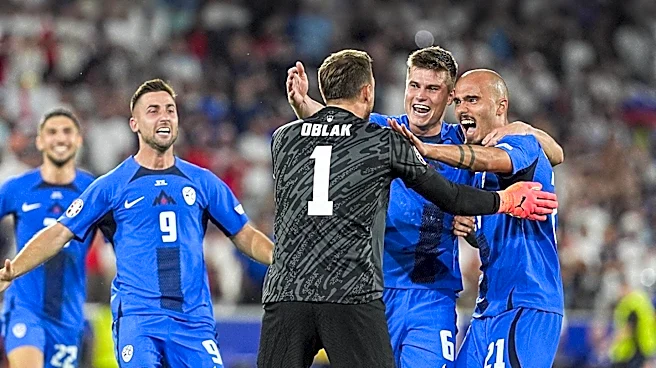
Jan Oblak, the captain of the Slovenian national football team and goalkeeper for Atlético Madrid, has recently become a father. He and his partner, Olga Danilović, welcomed a son named Maksim. Oblak, who typically maintains privacy regarding his personal
life, publicly shared his happiness about becoming a father for the first time ahead of Slovenia's upcoming UEFA Nations League match against Switzerland. He emphasized that this new role will not impact his professional football career, describing fatherhood as the most beautiful thing that has happened to him. Oblak also stated that he will not steer his son towards football, allowing Maksim to choose his own path in sports or any other endeavor, highlighting the importance of a child's engagement in sports from a young age.
Why It's Important?
This personal milestone for Jan Oblak, a prominent figure in international football, offers a rare glimpse into the private life of a top athlete. While not directly impacting U.S. sports, it resonates with broader themes of work-life balance and personal fulfillment that are universally recognized, including within the U.S. sports landscape. For fans and aspiring athletes, it humanizes a celebrated player, showing that even at the pinnacle of professional sports, personal joys and family life hold significant importance. Oblak's stance on allowing his son to choose his own sporting path also reflects a growing trend among professional athletes to prioritize their children's autonomy and well-being over predetermined career paths, a sentiment often echoed in discussions about youth sports development in the U.S.
What's Next?
Jan Oblak is expected to continue his role as captain and goalkeeper for the Slovenian national team in their crucial UEFA Nations League match against Switzerland. Following this, he will return to his club duties with Atlético Madrid. His recent fatherhood is unlikely to alter his immediate professional commitments, but it may bring a new perspective to his career. Speculation, albeit in jest, has arisen regarding Maksim's future sporting allegiance, given his parents' diverse athletic backgrounds (Oblak in football for Slovenia and Danilović, a Serbian tennis player). However, Oblak has made it clear that he will support his son's choices, indicating a future where Maksim's athletic journey will be self-determined.
Beyond the Headlines
Beyond the immediate news of fatherhood, Oblak's comments touch upon the broader societal discussion surrounding parental influence on children's career choices, particularly in high-profile fields like professional sports. His decision not to push his son into football, despite his own success, highlights a shift towards fostering individual passion and autonomy. This perspective challenges the traditional narrative where children of successful athletes are often expected to follow in their parents' footsteps. It underscores the ethical consideration of allowing children to explore their interests freely, promoting holistic development rather than early specialization. This approach could serve as a model for parents and sports organizations globally, including in the U.S., advocating for a child-centric approach to sports participation.