

What's Happening?
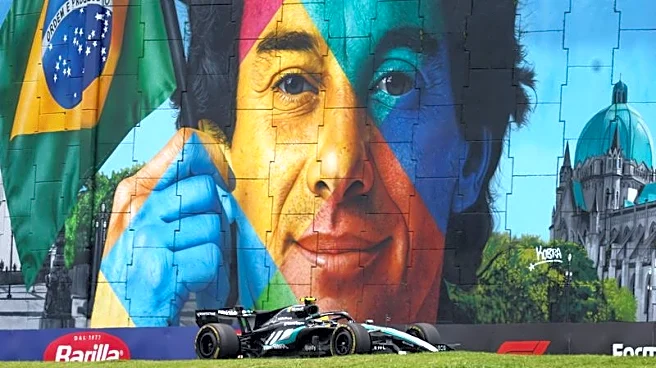
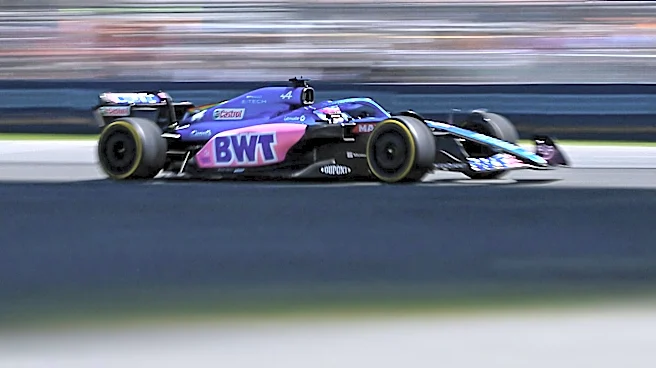
Williams driver Alex Albon was issued a five-second time penalty and two penalty points on his Super Licence following an incident at the 2026 Brazilian Grand Prix. The FIA stewards determined that Albon rejoined the Interlagos circuit unsafely at Turn
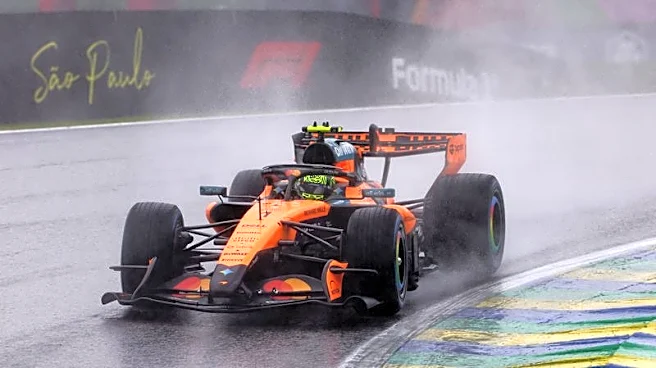
3 after leaving the track at Turn 2, forcing Alpine's Pierre Gasly to brake. According to the stewards' explanation, cars on track should not be compelled to slow down for a rejoining vehicle. This incident brings Albon's total penalty points to three within a 12-month period. Gasly described having to 'slam the brake' in a high-speed corner due to Albon's maneuver. Albon, however, expressed uncertainty about alternative actions, citing the presence of only a dry line and the risk of spinning if he accelerated into the wet part of the track. The race conditions were challenging, with the track drying after pre-race rain before rain intensified again in the later stages, prompting drivers to switch back to intermediate tires.
Why It's Important?
This penalty impacts Alex Albon's standing and Williams' performance in the Formula One season. The accumulation of penalty points can lead to race bans if a driver reaches 12 points within a 12-month period, making each new penalty significant for a driver's career trajectory. For Williams, the five-second time penalty could affect their race results and points tally, which is crucial for their position in the Constructors' Championship. The incident also highlights the ongoing debate and challenges drivers face regarding track limits and safe re-entry, especially in variable weather conditions. Stewards' decisions like this reinforce the strict regulations designed to ensure driver safety and fair competition, influencing how drivers approach similar situations in future races. The differing perspectives between Albon and Gasly also underscore the subjective nature of on-track incidents and the difficulty in making split-second decisions under pressure.
What's Next?
Alex Albon will continue the 2026 Formula One season with three penalty points on his Super Licence, requiring him to drive cautiously to avoid further sanctions that could lead to a race ban. The Williams team will likely review the incident with Albon to strategize on how to manage similar situations in future races, particularly under challenging weather conditions. The FIA's consistent application of penalties for unsafe re-entry will serve as a precedent for other drivers, reinforcing the importance of adhering to safety protocols when rejoining the track. As the season progresses, all drivers will be mindful of accumulating penalty points, which could influence their driving style and risk assessment during races. The incident may also prompt further discussions within the F1 community regarding the clarity and interpretation of rules surrounding track limits and safe re-entry, especially when track conditions are rapidly changing.
Beyond the Headlines
The incident involving Alex Albon extends beyond a simple penalty, touching upon the inherent risks and ethical considerations in high-stakes motor racing. Drivers are constantly balancing aggressive racing for position against safety regulations, often making split-second decisions that can have significant consequences. Albon's defense, citing the limited dry line and risk of spinning, highlights the complex decision-making process under extreme pressure and variable conditions. This raises questions about the practical application of rules in dynamic environments and whether current regulations adequately account for such nuances. The incident also underscores the subjective nature of judging 'unsafe' maneuvers, as what one driver perceives as necessary to maintain control, another might view as reckless. This ongoing tension between competitive instinct and regulatory compliance is a core aspect of Formula One, continually shaping driver behavior and the evolution of racing rules.