





What's Happening?
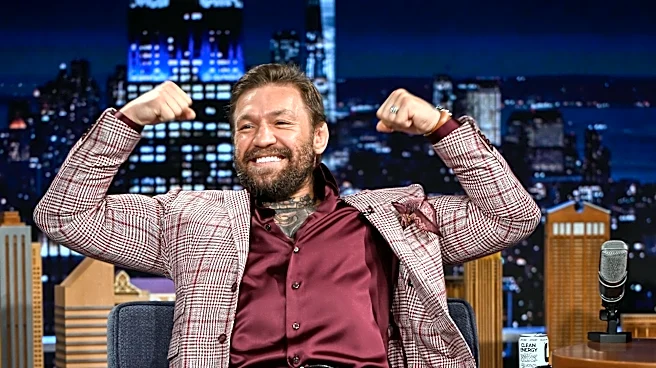
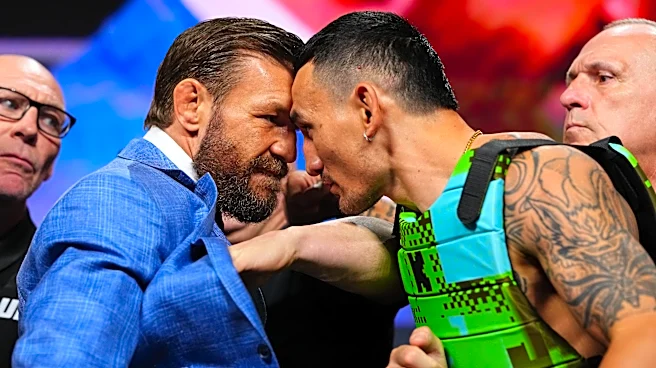
Conor McGregor's manager, John Kavanagh, has publicly stated that McGregor did not have a pre-existing knee injury before his UFC 329 fight against Max Holloway. The fight, which marked McGregor's return to the octagon after a five-year hiatus, ended
abruptly after just 1:09 due to a knee injury McGregor sustained while attempting an opening roundhouse kick. Kavanagh emphasized on social media that the kick had been practiced extensively without issue prior to the fight. Despite the injury occurring during the match, both McGregor and UFC President Dana White confirmed there was no prior injury to McGregor's knee.
Why It's Important?
The abrupt end to McGregor's comeback fight is significant for several reasons. McGregor is one of the most high-profile fighters in the UFC, and his return was highly anticipated by fans and the sports community. The injury and subsequent loss could impact McGregor's future in the sport, potentially affecting his marketability and drawing power. Additionally, the incident raises questions about athlete preparation and injury management in high-stakes sports. The UFC, as a major sports organization, may face scrutiny regarding fighter safety and the protocols in place to prevent such injuries.
What's Next?
Following the fight, McGregor's immediate future in the UFC remains uncertain. Recovery from the knee injury will likely dictate his ability to return to the octagon. The UFC and McGregor's team will need to assess the injury's severity and determine a timeline for his rehabilitation. Fans and analysts will be watching closely for updates on McGregor's condition and any announcements regarding his next potential fight. The UFC may also review its safety protocols to ensure fighter health is prioritized in future events.