
What's Happening?
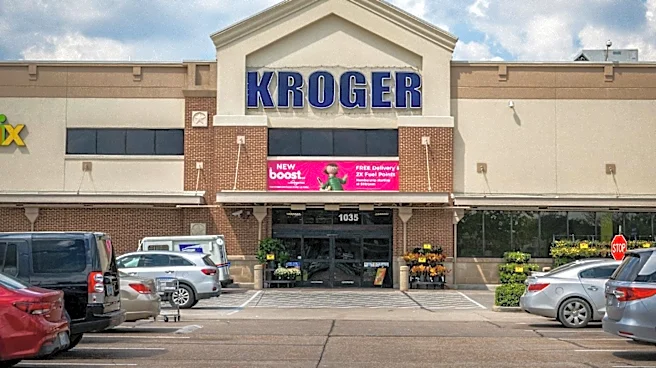
Kroger and Sam's Club are evolving their retail media networks (RMNs) by leveraging shopper behavior data to create more targeted advertising and product discovery efforts. According to a report by Placer.ai,
these retailers are moving beyond traditional in-store placements to utilize data on traffic, dwell time, visit frequency, and shopper demographics. Kroger's RMN data, for instance, allows brands to tailor advertising to specific consumer segments across its regional banners, such as Ralphs and Food 4 Less, which exhibit different household incomes and family sizes. The report suggests that digital endcap screens could enhance product discovery and in-store engagement, particularly in stores with shorter shopping trips. Sam's Club is expanding its ad inventory by installing digital screens at fuel pumps, recognizing that fuel station traffic has outpaced overall store traffic growth, offering an additional touchpoint for brands to engage with members.
Why It's Important?
The shift towards data-driven retail media strategies by major retailers like Kroger and Sam's Club signifies a significant evolution in how brands connect with consumers. This approach allows for more precise targeting, potentially increasing the effectiveness of advertising spend and driving sales. For brands, it means access to sophisticated tools to understand and influence shopper behavior at the point of purchase. For retailers, RMNs create new revenue streams and strengthen customer loyalty by offering more relevant promotions. The emphasis on in-store discovery through digital displays and the expansion of ad inventory to non-traditional spaces like gas pumps highlight the innovative ways retailers are adapting to changing consumer shopping habits and maximizing engagement opportunities. This trend could lead to a more personalized shopping experience for consumers and more efficient marketing for brands.
What's Next?
The continued maturation of retail media networks suggests that more retailers will likely adopt similar data-driven strategies, further integrating shopper behavior insights into their advertising and merchandising. Brands will need to adapt their marketing approaches to effectively utilize these evolving RMN platforms, focusing on tailored content and promotions. The expansion of advertising touchpoints beyond the traditional store interior, such as Sam's Club's use of fuel pumps, indicates a future where consumer engagement opportunities will be more pervasive and integrated into various aspects of the shopping journey. This could lead to increased competition among brands for prime digital ad space within these networks and a greater emphasis on measuring the return on investment for these targeted campaigns.
Beyond the Headlines
This development points to a broader trend of retailers transforming into media companies, leveraging their vast customer data to create valuable advertising platforms. The ethical implications of collecting and utilizing extensive shopper data will become increasingly important, raising questions about data privacy and consumer consent. As these networks become more sophisticated, there's a potential for a more seamless, almost invisible, integration of advertising into the shopping experience, which could influence consumer choices in subtle yet powerful ways. The success of these strategies will depend not only on technological advancements but also on maintaining consumer trust and demonstrating clear value to both shoppers and advertisers, potentially reshaping the competitive landscape of the retail industry.