







What's Happening?
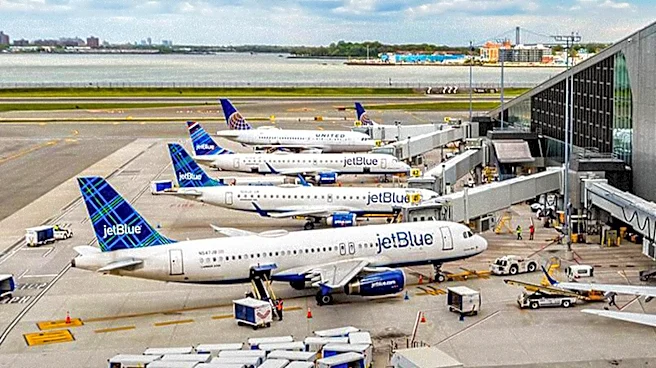
JetBlue Airways has recently announced a significant leadership change, promoting Jeffrey Winter to the role of Senior Vice President of Flight Operations, Inflight Experience, and Technical Operations. This strategic appointment consolidates three previously
distinct and major operating units under a single executive, signaling a move towards streamlined management and potentially enhanced operational synergy. The airline's financial performance has presented a mixed outlook to investors; while it has experienced a positive 23.36% share price return over the last 90 days, its five-year total shareholder return shows a substantial decline of 60.10%. This contrast highlights both recent market interest and long-term challenges. Furthermore, the company continues to grapple with several meaningful risks that could impact its future profitability. These include its inherent exposure to the volatile swings in jet fuel prices, a critical operational cost for any airline, and persistent pressure from rising labor costs across the industry. These factors are explicitly identified as potential impediments that could compress profit margins and delay the achievement of JetBlue's stated financial goals, making the new leadership's role crucial in navigating these economic headwinds.
Why It's Important?
The consolidation of three vital operational units under Jeffrey Winter's leadership is a significant development for JetBlue Airways, reflecting a strategic effort to enhance efficiency and coordination across its core functions. This move could be a direct response to the airline's challenging financial performance, particularly the substantial long-term decline in shareholder value, despite a recent short-term stock rebound. For the broader U.S. airline industry, such organizational restructuring could signal a trend towards more integrated management models aimed at optimizing resource allocation and improving overall operational resilience. Investors and market analysts will closely monitor how this new structure impacts JetBlue's ability to mitigate the inherent risks of the airline sector, such as volatile jet fuel prices and escalating labor costs. These external pressures are not unique to JetBlue but are systemic challenges that can significantly erode profitability and influence strategic decisions across the entire industry. The success or failure of this consolidation could provide valuable insights into effective management strategies for navigating the complex economic landscape faced by U.S. carriers.
What's Next?
Following the operational reshuffle and Jeffrey Winter's promotion, JetBlue Airways is expected to focus intensely on leveraging this consolidated leadership to address its financial and operational challenges. The immediate future will likely involve efforts to optimize the newly integrated Flight Operations, Inflight Experience, and Technical Operations units, aiming for greater efficiency and cost control. The airline will need to demonstrate its ability to manage the persistent risks of fluctuating jet fuel prices and rising labor costs, which are critical determinants of its profit margins and overall financial health. Concurrently, JetBlue is poised to capitalize on favorable market trends, particularly the sustained rebound in leisure travel and the strong demand from younger demographics like Millennials and Gen Z, who are increasingly prioritizing travel experiences. This demographic shift is anticipated to drive close-in bookings and bolster premium cabin and loyalty program revenues, contributing to higher ticket sales and overall topline expansion. Stakeholders, including investors and industry observers, will be closely watching for tangible improvements in revenue momentum and signs of margin repair as the airline implements its updated strategy.
Beyond the Headlines
The strategic decision by JetBlue Airways to consolidate key operational leadership roles under a single Senior Vice President extends beyond mere corporate restructuring; it reflects a deeper industry-wide imperative for agility and resilience in a highly dynamic market. This move could signify a broader trend among U.S. airlines to centralize decision-making and foster greater synergy between critical customer-facing and technical functions, potentially leading to more consistent service delivery and cost efficiencies. The airline's focus on capturing demand from Millennials and Gen Z, who prioritize experiences, highlights a fundamental shift in consumer travel patterns. This necessitates a continuous evolution of service offerings and marketing strategies to remain competitive. Furthermore, the ongoing struggle with external factors like fuel price volatility and labor cost inflation underscores the inherent fragility of the airline business model, which often operates on thin margins. This situation prompts a continuous re-evaluation of operational strategies, technological adoption, and labor relations across the entire sector, influencing long-term investment and innovation trajectories within the U.S. aviation landscape.