







What's Happening?
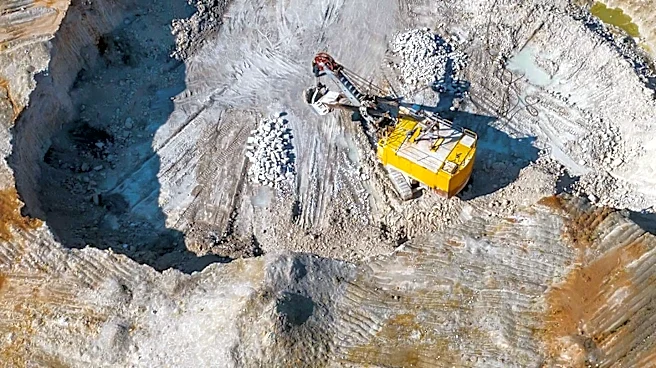
The Mosaic Company, a major producer of phosphate fertilizer, is shuttering one of its mines in Central Florida, leading to nearly 200 job losses. This decision follows a similar action in Louisiana that affected 300 jobs. According to Jackie Barron,
a senior manager of public affairs with The Mosaic Company, these closures are a direct consequence of ongoing disruptions in global sulfur supplies. The war in Ukraine and the closure of the Strait of Hormuz have caused sulfur prices to remain extremely elevated, making it financially unfeasible to continue operations. Barron emphasized that for every 10 million tons of phosphate fertilizer manufactured, 4 million tons of sulfur are required, highlighting the critical role of affordable sulfur in their production process. The company's production curtailments are expected to persist through at least the first quarter of 2027.
Why It's Important?
The idling of The Mosaic Company's Florida mine and previous Louisiana operations signifies a significant impact on the U.S. agricultural sector and its supply chain. As a major producer of phosphate fertilizer, Mosaic's reduced output will lead to tighter supplies and likely little price relief for farmers, as projected by Barron. This situation could increase operational costs for agricultural businesses, potentially affecting food production expenses and, consequently, consumer prices. The job losses in Florida and Louisiana also represent an economic blow to the affected communities. The reliance on global supply chains for essential raw materials like sulfur underscores the vulnerability of domestic industries to international geopolitical events and trade route disruptions, impacting both employment and the cost of agricultural inputs.
What's Next?
The Mosaic Company's production curtailments are anticipated to continue through at least the first quarter of 2027. This prolonged period of reduced output suggests that the challenges related to global sulfur supplies and elevated prices are not expected to resolve quickly. Farmers and agricultural wholesalers will likely face continued uncertainty regarding fertilizer availability and pricing. While Mosaic sells to wholesalers, who then adjust their pricing, the overall trend points to sustained higher costs for agricultural inputs. The company's financial outlook remains 'fairly cloudy,' according to Barron, indicating potential ongoing adjustments to their operations and workforce in response to market conditions. Stakeholders in the agricultural sector will need to monitor global sulfur market developments closely.
Beyond the Headlines
The situation faced by The Mosaic Company highlights the intricate interdependencies within global supply chains and the profound impact of geopolitical events on seemingly unrelated industries. The war in Ukraine and the closure of the Strait of Hormuz, distant from U.S. agricultural fields, directly influence the cost and availability of essential fertilizers. This scenario underscores a broader vulnerability in the U.S. economy, where critical inputs for domestic production are subject to international instability. It also raises questions about the long-term resilience of agricultural supply chains and the potential need for strategies to mitigate such external shocks, possibly through diversification of sourcing or investment in alternative production methods to ensure food security and economic stability.