








What's Happening?
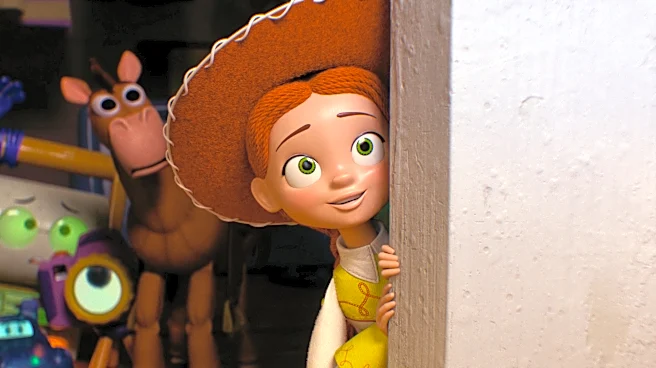
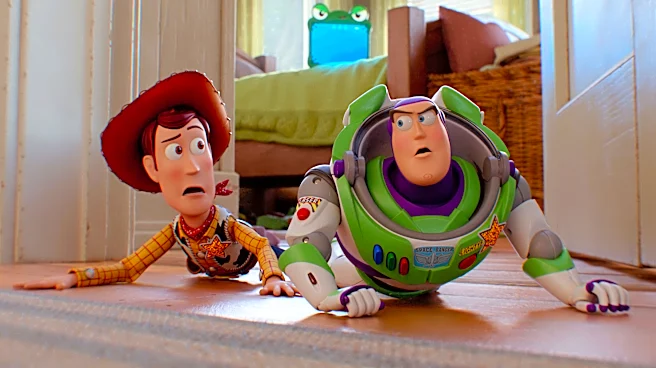
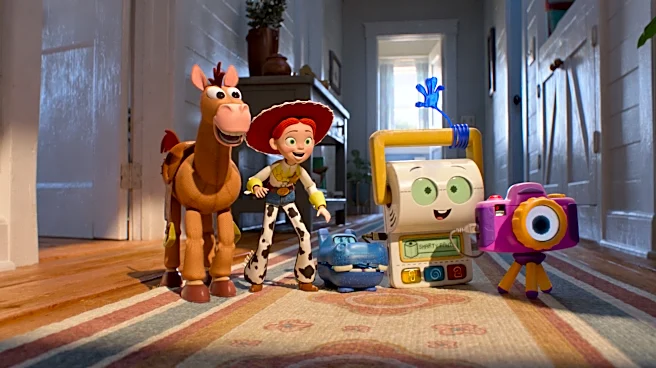
Toy Story 5, directed by Andrew Stanton, brings back beloved characters with a focus on Jessie, voiced by Joan Cusack. The film explores themes of friendship and the impact of technology on children's play. Jessie takes a leading role as she tries to help
Bonnie, the young owner of the toys, connect with her peers. The story highlights the challenges toys face in a world where children are increasingly absorbed by digital devices. Jessie discovers that many children, including Bonnie's neighbors, are more interested in screens than in physical play. The film addresses the concern that traditional toys are becoming obsolete in the digital age.
Why It's Important?
Toy Story 5 addresses a timely issue: the growing influence of technology on children's lives and its impact on traditional play. By focusing on Jessie and her efforts to engage Bonnie in physical play, the film underscores the importance of interpersonal interactions and creativity in child development. This narrative resonates with parents and educators who are concerned about the effects of excessive screen time on children's social skills and imagination. The film's message encourages a balance between technology and traditional play, promoting the idea that both can coexist to enhance children's experiences.
Beyond the Headlines
Beyond its entertainment value, Toy Story 5 offers a cultural commentary on the evolving nature of play in the digital age. The film suggests that while technology can offer new forms of engagement, it should not replace the fundamental experiences that toys and physical play provide. This perspective aligns with ongoing discussions about the role of technology in education and child development. The film's portrayal of Jessie as a proactive and resilient character also reinforces positive messages about leadership and adaptability, qualities that are increasingly important in a rapidly changing world.