




What's Happening?
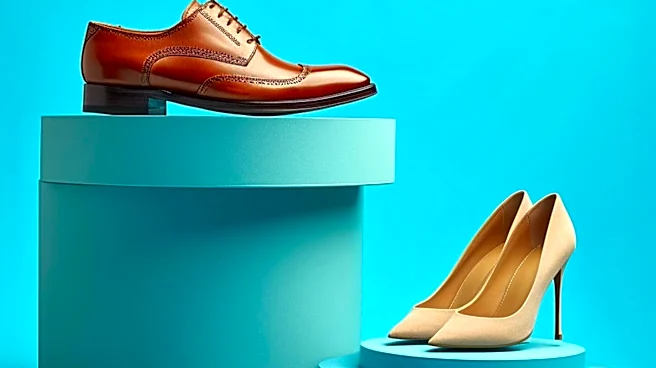
The Strategist has conducted a search for gender-inclusive flats, highlighting a growing trend in the footwear industry where companies are manufacturing designs in a full range of sizes without differentiating for gender. The article notes that while
the fashion industry is not yet fully gender-inclusive, a significant number of shoe companies are moving in this direction. The author, who sought sleek menswear-inspired flats in smaller sizes, found numerous options available. The piece reviews several brands and styles, including Cruda Solo Flat, Suzanne Rae Glove Shoe, and Jacques Soloviere Paris Matt Shoe, detailing their features, comfort, and size ranges. The article emphasizes that gender-inclusive fashion means making all clothing for all shapes and sizes, as articulated by comic artist Mattie Lubchansky.
Why It's Important?
The increasing availability of gender-inclusive footwear, as explored by The Strategist, signifies a notable shift in consumer demand and industry response within the U.S. fashion market. This trend is important because it addresses the needs of individuals who do not conform to traditional gendered sizing or styles, offering them more options for self-expression and comfort. Historically, footwear has been rigidly categorized by gender, often limiting choices for those with non-standard foot sizes or preferences that cross traditional gender lines. The move towards gender-neutral sizing and design can lead to a more equitable and inclusive retail environment, potentially expanding market opportunities for brands that embrace this approach. It also challenges established norms in product development and marketing, encouraging companies to think beyond binary classifications and cater to a broader, more diverse customer base. This shift can influence other segments of the fashion industry to adopt similar inclusive practices.
What's Next?
As consumer demand for gender-inclusive fashion continues to grow, more footwear brands are likely to expand their size ranges and design philosophies to cater to a broader audience. The success of brands highlighted in The Strategist's review may encourage other manufacturers to invest in gender-neutral collections, moving beyond niche markets into mainstream retail. This could lead to increased innovation in design, focusing on universal appeal and comfort rather than gender-specific aesthetics. Retailers may also begin to re-evaluate their store layouts and online categorization to better accommodate gender-inclusive products, making it easier for consumers to find what they are looking for. Furthermore, the conversation around gender-inclusive fashion is expected to broaden, influencing not just footwear but also apparel and accessories, pushing the industry towards a more fluid and less restrictive approach to design and marketing.
Beyond the Headlines
The movement towards gender-inclusive footwear and fashion reflects a deeper societal evolution in understanding and expressing gender identity. Beyond practical considerations of fit and style, gender-neutral clothing challenges the cultural constructs that link specific garments to masculinity or femininity. This shift has significant implications for personal identity and social acceptance, allowing individuals greater freedom to present themselves in ways that align with their inner sense of self, rather than conforming to external expectations. It also fosters a more empathetic and understanding society by normalizing diverse forms of expression. The economic impact extends to creating new market segments and fostering brand loyalty among consumers who feel seen and catered to. Ultimately, the rise of gender-inclusive fashion is not just about clothes or shoes; it's about a fundamental re-evaluation of how society perceives and categorizes individuals, promoting a more inclusive and authentic world.