



What's Happening?
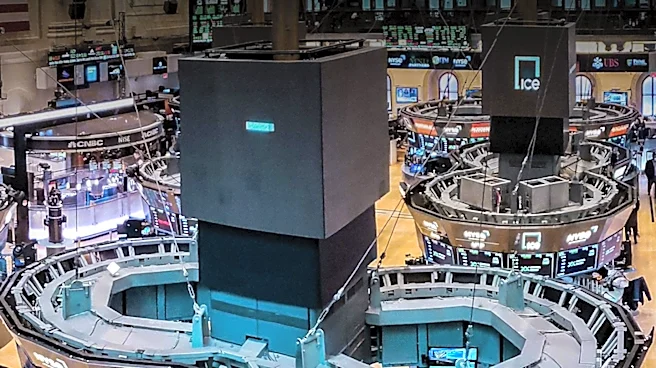
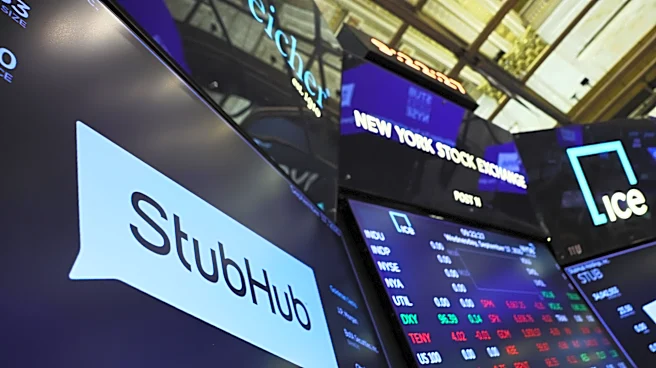
OKX, a crypto exchange, in partnership with Intercontinental Exchange (ICE), the owner of the New York Stock Exchange, has launched a new venue for trading tokenized U.S. securities. This venture, named OKXICE, went live at 12 p.m. ET on Monday, appearing
as a new tab within the OKX app. Initially, six stocks—Coinbase, Securitize, Strategy, BitGo, Robinhood, and Circle—are available for trading, paired with the USDC stablecoin. The platform plans to add 113 stocks, ETFs, and exchange-traded products (ETPs) in stages starting from November 23. Eligibility is restricted to vetted U.S. customers of OKX Inc. who pass identity checks. The venue operates under the SEC’s Innovation Exemption, a temporary conditional relief issued in September, which allows qualifying venues to trade tokenized versions of U.S.-listed stocks under specific conditions, including trading volume limits. Securitize tokenizes the shares, with each token backed by one real share, passing through dividends and voting rights. Trades are settled against automated market maker (AMM) pools built with Uniswap v4 on X Layer, OKX’s Ethereum layer-2 network. Notably, 67 companies, including Apple, Microsoft, Nvidia, and Tesla, have objected to their shares being traded on this platform.
Why It's Important?
The launch of OKXICE signifies a significant step in the integration of traditional financial markets with blockchain technology in the U.S. This initiative could potentially revolutionize how U.S. investors access and trade securities by leveraging the efficiency and transparency of tokenization. By offering tokenized versions of stocks, the platform aims to provide new avenues for investment and potentially lower barriers to entry for certain assets. The involvement of ICE, a major player in traditional finance, lends credibility to the venture and could encourage broader adoption of tokenized assets. However, the objections from 67 major companies highlight ongoing concerns and potential resistance from corporations regarding the tokenization of their shares without their explicit consent. This resistance could pose challenges to the widespread acceptance and growth of such platforms, as companies may fear loss of control or other unforeseen implications. The SEC's Innovation Exemption provides a regulatory sandbox, but the long-term regulatory framework for tokenized securities remains a developing area, making this launch a crucial test case for future innovations in the U.S. financial landscape.
What's Next?
The OKXICE platform is set to expand its offerings, with 113 assets slated for gradual addition starting November 23. This expansion will test the platform's scalability and its ability to attract more users and issuers. The venture's co-chairs, Andrew M. Cuomo and Trabue Bland, have expressed intentions to grow the venue and expand access, indicating a strategic focus on increasing the number of available assets and participants. The ongoing operation under the SEC’s Innovation Exemption will be closely watched, as its success or challenges could influence future regulatory decisions regarding tokenized securities. The platform's policy of allowing companies to opt out of tokenization beyond the initial 30-day notification period, a decision made to enhance its attractiveness, will also be a key factor in managing corporate relations and potential legal challenges. The market's reaction to the initial six available stocks and the subsequent additions will provide valuable insights into investor appetite for tokenized assets and the overall viability of this new trading model in the U.S.
Beyond the Headlines
This development extends beyond mere trading mechanics, touching upon fundamental shifts in asset ownership and market structure. The tokenization of shares introduces a new paradigm where traditional equities are represented on a blockchain, potentially enabling fractional ownership, increased liquidity, and 24/7 trading. However, it also raises complex legal and ethical questions regarding corporate control, shareholder rights, and the implications for existing market infrastructures. The ability for companies to object to their shares being tokenized, even after the initial notification period, underscores the tension between decentralized finance principles and traditional corporate governance. This could lead to future legal battles over intellectual property rights and the definition of a 'security' in a tokenized world. Furthermore, the reliance on automated market maker (AMM) pools, where prices are set by asset ratios rather than the underlying stock's market, introduces new forms of price discovery and potential for price drift, especially during off-market hours. This could create arbitrage opportunities but also new risks for investors, highlighting the need for robust risk management frameworks in this evolving ecosystem.