







What's Happening?
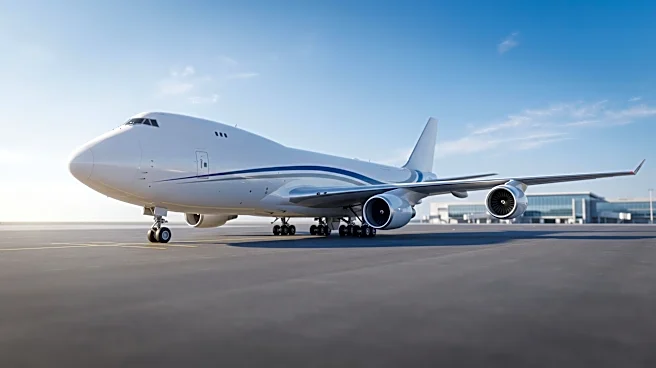
Kalitta Air, a cargo carrier operating a mixed freighter fleet of Boeing 747-400s and 777s, has undertaken a fleet-wide optimization project by standardizing its hydraulic fluid to ExxonMobil’s HyJet IV-Aplus. This initiative aims to enhance fleet reliability
and reduce maintenance downtime. The decision to standardize hydraulic systems followed a similar opportunity identified by Boeing to streamline jet oils across Kalitta Air’s fleet. The transition was efficiently executed using the 'top-off' method, minimizing maintenance downtime, with support and training from ExxonMobil experts. Kevin Jackson, maintenance fleet manager at Kalitta Air, noted that managing a single product has diminished human factor errors and simplified maintenance procedures. This standardization is part of a broader effort to navigate tight schedules and optimize aircraft ground time for maintenance.
Why It's Important?
The standardization of hydraulic fluid by Kalitta Air is significant for the U.S. aviation industry, particularly for cargo operations. By improving fleet reliability and reducing maintenance downtime, Kalitta Air can enhance its operational efficiency, which is crucial in the demanding air cargo sector. This move also highlights the importance of advanced fluid technologies in maintaining aging aircraft fleets, a prevalent issue in the industry. ExxonMobil's premium fluids, with their low-density composition, can contribute to reduced aircraft weight and lower fuel burn, offering economic and environmental benefits. For the broader U.S. economy, more reliable and efficient cargo operations can lead to smoother supply chains and reduced shipping costs, benefiting various industries that rely on air freight. The success of such optimization projects can set a precedent for other carriers facing similar challenges with mixed fleets and operational complexities.
What's Next?
Following the successful standardization of its hydraulic systems, Kalitta Air is likely to continue monitoring the long-term benefits, including further improvements in fleet reliability and reductions in operational costs. The company may explore additional opportunities for standardization across other aircraft components or maintenance procedures, leveraging the positive outcomes from this project. Other U.S. cargo and passenger airlines, particularly those with mixed fleets, might observe Kalitta Air's success and consider similar optimization strategies to enhance their own operational efficiencies and reduce maintenance burdens. The collaboration between Kalitta Air and ExxonMobil could also lead to further advancements in aviation fluid technology, driven by real-world performance data and ongoing operational needs.
Beyond the Headlines
This development underscores a deeper trend in the aviation industry: the increasing reliance on specialized materials and strategic partnerships to overcome operational challenges. The 'aging fleet crisis,' where operators extend the service lives of legacy aircraft, makes the role of advanced fluids like HyJet IV-Aplus even more critical. These fluids not only improve performance but also address safety concerns by offering high fire resistance and chemical stability, crucial for systems operating under extreme thermal stress. The ethical implication lies in balancing cost-cutting measures with safety and environmental responsibility. By investing in high-quality, standardized solutions, Kalitta Air is demonstrating a commitment to both operational excellence and the long-term sustainability of its fleet, potentially influencing industry best practices for maintenance and fluid management.