



What's Happening?
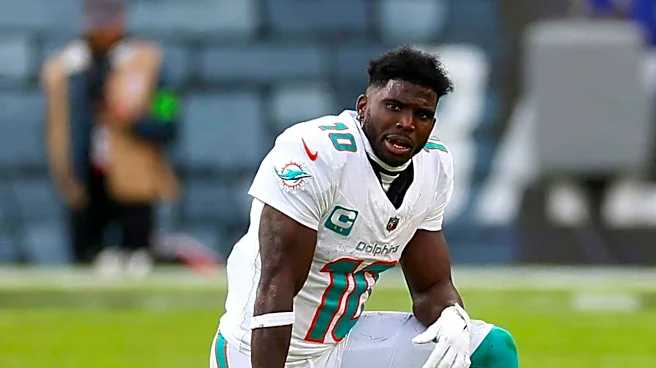
Tyreek Hill, a free agent wide receiver, is currently in Germany receiving treatment for a knee injury, casting significant doubt on his ability to play in the 2026 NFL season. Hill, who previously played for the Dolphins and Kansas City Chiefs, dislocated
his left knee and tore multiple ligaments in September 2025 while with the Dolphins. Despite undergoing two operations, he is still working to rebuild strength in his leg. Hill shared footage from Munich on Snapchat, indicating he is undergoing 'Treatment' with renowned physician Dr. Hans-Wilhelm Muller-Wohlfahrt. This medical journey comes as NFL teams, including his former team the Kansas City Chiefs, are reportedly exploring options to bolster their receiving corps ahead of the November 10 trade deadline. Hill's agent, Drew Rosenhaus, has engaged with several teams, but no immediate signing is on the horizon. In addition to his injury, Hill faces legal challenges; a civil jury in October 2026 found him liable for two counts of battery in a case brought by his estranged wife, Lakeeta Vaccaro, awarding her $500,000 in compensatory damages. The NFL is monitoring these developments, which could lead to a potential suspension.
Why It's Important?
Tyreek Hill's uncertain return significantly impacts the NFL landscape, particularly for teams in need of a dynamic wide receiver. His previous performance, including over 1,000 receiving yards in six seasons and a Super Bowl LIV win, makes him a highly sought-after talent when healthy. His absence or delayed return could force teams like the Kansas City Chiefs, who are actively seeking to strengthen their receiving options due to injuries to other players, to pursue alternative trade targets or free agents. The ongoing legal issues add another layer of complexity, as a potential NFL suspension could further diminish his market value and availability, regardless of his physical recovery. This situation highlights the dual challenges professional athletes face: maintaining peak physical condition and navigating personal conduct standards set by their leagues. For Hill, the financial implications are substantial, as his ability to secure a new contract and earn millions in the 2026 season is directly tied to his recovery and resolution of legal matters.
What's Next?
The immediate next steps for Tyreek Hill involve continuing his rehabilitation in Germany and assessing the progress of his knee injury. His agent will likely continue discussions with NFL teams, but any potential signing will hinge on medical clearances and the resolution of his legal situation. The NFL's review of the civil jury's battery findings could lead to a suspension, which would further delay his return to the field. Meanwhile, teams like the Kansas City Chiefs will continue to explore other wide receiver options ahead of the November 10 trade deadline, considering players like Brian Thomas Jr. or Josh Downs. The outcome of Hill's treatment and the NFL's decision regarding his conduct will dictate his future in the league, potentially influencing team rosters and competitive dynamics for the remainder of the 2026 season and beyond.
Beyond the Headlines
Beyond the immediate concerns of Tyreek Hill's playing status, this situation underscores broader issues within professional sports regarding player welfare, accountability, and the intersection of personal conduct with professional careers. The extensive medical treatment in Germany highlights the lengths athletes go to recover from severe injuries, often seeking specialized care globally. Simultaneously, the civil battery verdict and the NFL's subsequent review bring into focus the league's personal conduct policy and its enforcement. This case could serve as a precedent or reinforce existing standards for how the NFL addresses off-field legal issues involving its players, potentially influencing future disciplinary actions. The ongoing uncertainty surrounding Hill's future also reflects the precarious nature of athletic careers, where a combination of physical health, legal standing, and market demand dictates longevity and financial stability in a high-stakes industry.