







What's Happening?
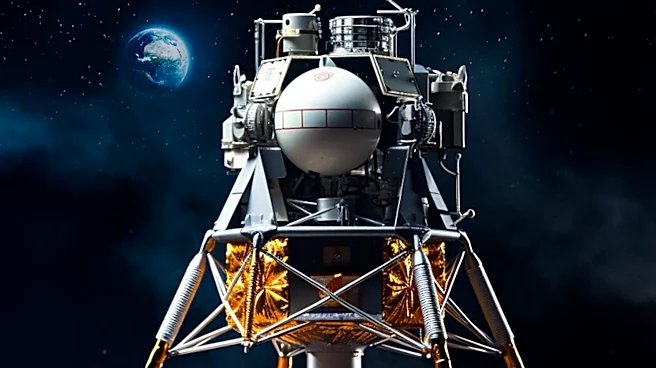
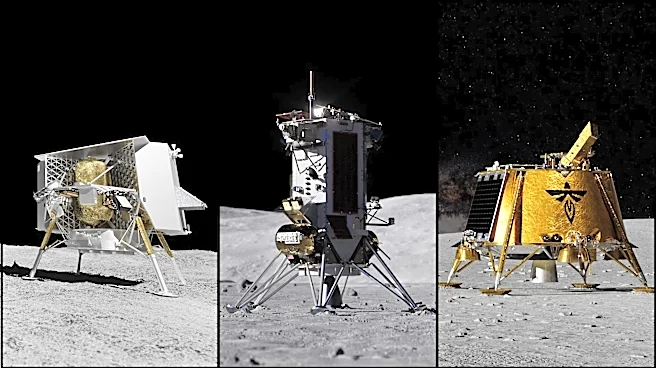
Firefly Aerospace, a space and defense technology company, has been awarded a $144 million contract by NASA under the Commercial Lunar Payload Services (CLPS) program. The contract involves delivering a rapid mission to the Moon using Firefly's Blue Ghost
lunar lander. This mission, set to launch in 2028, aims to demonstrate repeatable access to the lunar surface on an accelerated timeline. Firefly plans to design, build, test, and deliver the mission in approximately two years, leveraging its proven Blue Ghost lander design. The mission will deliver three NASA science instruments to the Moon's near side, including the Laser Retroreflector Array, Linear Energy Transfer Spectrometer, and Stereo Cameras for Lunar Plume Surface Studies.
Why It's Important?
This contract highlights the growing role of commercial companies in space exploration and NASA's reliance on private sector innovation for lunar missions. Firefly's ability to deliver rapid and repeatable lunar missions supports NASA's broader goals of establishing a permanent lunar presence and advancing the Artemis program. The contract also underscores the importance of public-private partnerships in achieving space exploration objectives. For Firefly, this contract represents a significant milestone, enhancing its reputation and capabilities in the space industry. The mission's success could pave the way for more frequent and cost-effective lunar missions, benefiting scientific research and exploration.
What's Next?
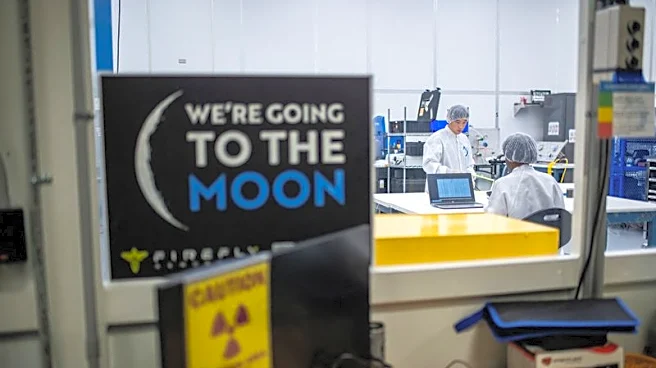
Firefly Aerospace will focus on executing the contract by designing and building the Blue Ghost lander for the 2028 mission. The company plans to utilize its existing facilities in Texas to streamline production and integrate lessons learned from previous missions. As Firefly scales up its spacecraft production, it aims to reduce delivery timelines and enhance operational efficiency. The success of this mission could lead to additional contracts and collaborations with NASA and other commercial partners, further solidifying Firefly's position in the space industry. The company's strategic growth and innovation efforts will be crucial in meeting the increasing demand for lunar missions.