






What's Happening?
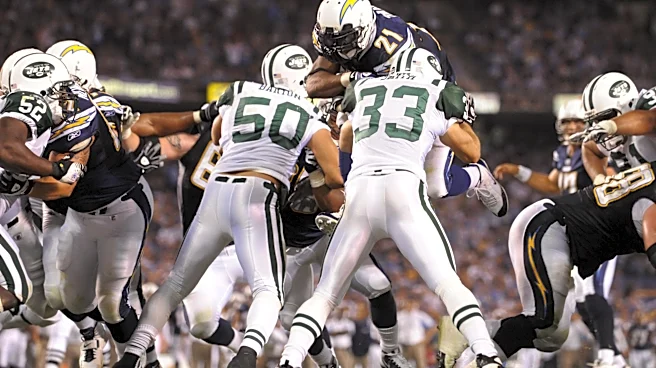
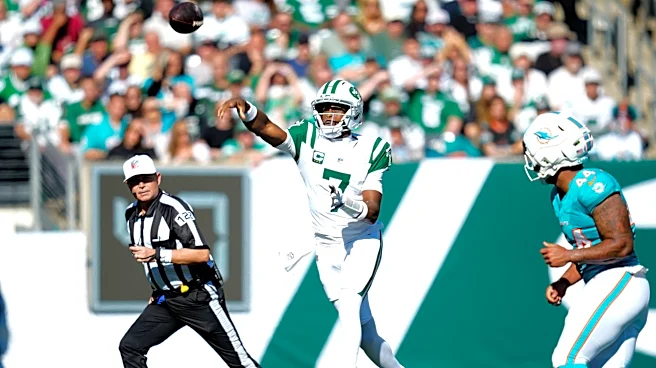
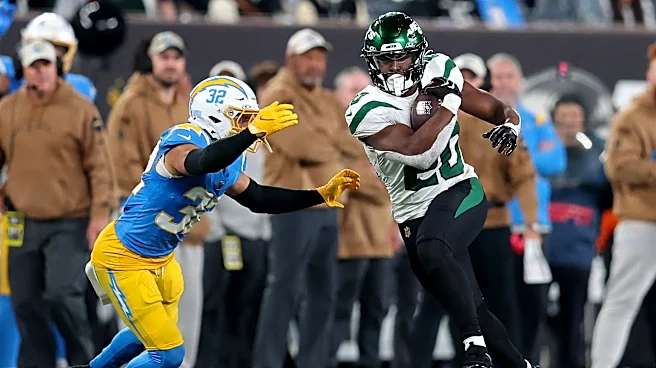
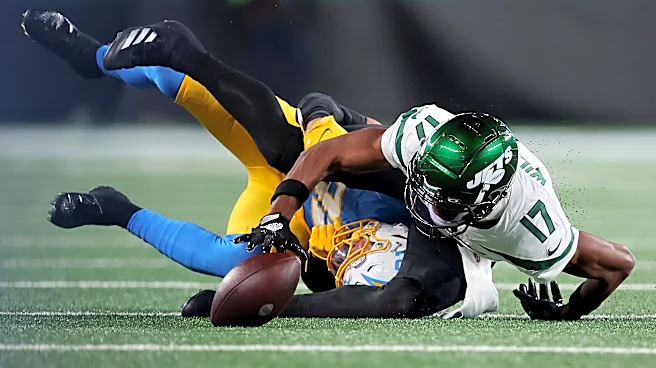
New York Jets wide receiver Garrett Wilson has publicly acknowledged his dissatisfaction with his red zone production this season. The Jets' offense is currently last in the NFL for red zone touchdown conversion rate at 37.93%, a figure that has dropped
to 22.22% over their last three games. Wilson has been targeted eight times in the red zone but has only recorded one reception. This comes as the team has not scored a touchdown from anywhere on the field in their last nine quarters. Quarterback Geno Smith also commented on the team's red zone issues, emphasizing the importance of an effective run game to open up passing opportunities in confined spaces. Both Smith and Wilson highlighted the need for better execution and discipline to finish drives, with Wilson taking personal responsibility for his performance in these critical situations.
Why It's Important?
The Jets' ongoing struggles in the red zone have significant implications for the team's overall performance and their ability to compete. Inefficiency in scoring opportunities directly translates to fewer points on the scoreboard, which can be the difference between wins and losses in a competitive league like the NFL. For Garrett Wilson, a key offensive weapon, his candid assessment underscores the pressure on individual players to perform in high-stakes situations. The collective failure to convert red zone opportunities impacts team morale, coaching strategies, and potentially the job security of staff and players. This issue highlights how critical execution in specific game situations is to a team's success, affecting fan engagement and the financial performance of the franchise through ticket sales and merchandise.
What's Next?
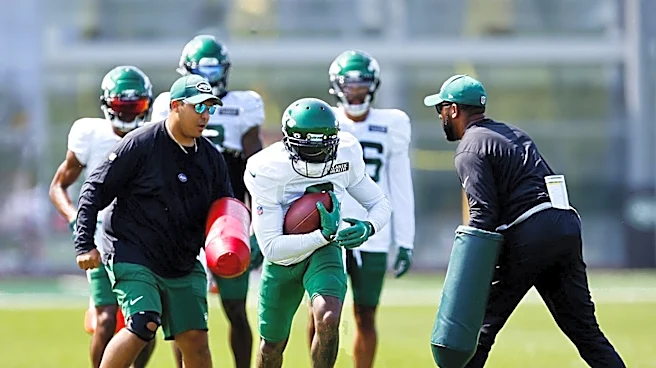
The Jets plan to focus on adjustments, execution, and accountability throughout the week, with an emphasis on red zone performance during practice. Both Geno Smith and Garrett Wilson have indicated that extra work is being put in to improve their ability to finish drives. The team's next meaningful response to these struggles will need to come during their upcoming games, particularly when they approach the goal line. The effectiveness of these adjustments will be closely watched by fans, analysts, and the coaching staff, as the team aims to reverse its trend of offensive inefficiency and capitalize on scoring opportunities to improve their standing in the league.
Beyond the Headlines
The Jets' red zone struggles extend beyond mere statistics, touching upon the psychological and strategic aspects of professional football. The willingness of a prominent player like Garrett Wilson to openly accept responsibility can foster a culture of accountability within the team, potentially motivating other players to address their own shortcomings. This situation also highlights the intricate relationship between different offensive components—the run game, passing game, and individual player execution—and how a breakdown in one area can cascade into broader team inefficiency. The ongoing challenge for the Jets is not just about physical execution but also about mental fortitude and strategic adaptation under pressure, which are crucial for long-term success in the NFL.