




What's Happening?
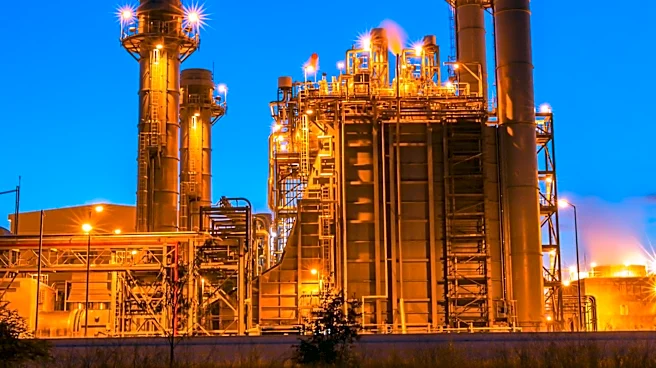
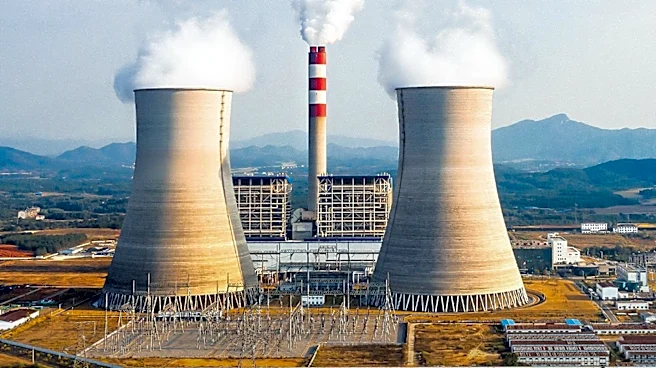
SpaceX has announced plans to power its Terafab semiconductor and advanced-computing campus in Grimes County, Texas, using onsite generation and battery storage, rather than relying on the traditional electric grid. This decision is part of a tax-abatement
agreement with the county, which outlines a $16.8 billion initial investment in the project. The Terafab campus, which will include a semiconductor manufacturing plant, an AI facility, and a power plant, is expected to be powered by natural gas-fired power plants and large battery arrays. The project is designed to ensure high power quality and continuity, essential for semiconductor manufacturing processes. SpaceX's strategy includes a four-phase development plan with a potential total investment of $119 billion.
Why It's Important?
SpaceX's decision to self-supply power for the Terafab campus represents a significant shift in how large industrial facilities manage their energy needs. By relying on onsite generation, SpaceX aims to control critical infrastructure elements, such as power generation and storage, which are typically managed by public utilities. This approach could set a precedent for other large-scale industrial projects, particularly in the semiconductor and AI sectors, where power reliability and quality are crucial. The move also highlights the growing importance of energy independence and sustainability in industrial operations, potentially influencing future infrastructure development strategies across various industries.