


What's Happening?
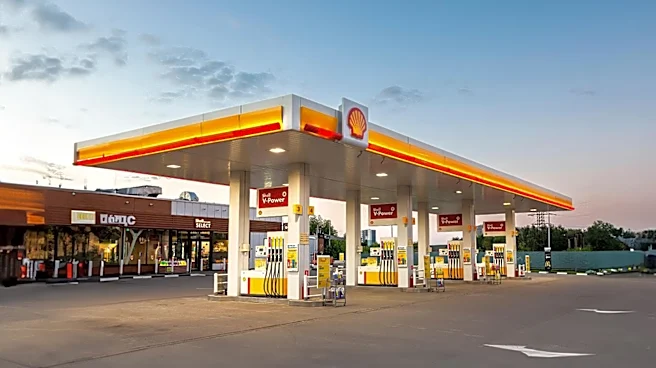
Oklahoma City officials are in active discussions to bring the first Buc-ee's travel center to the state, as confirmed by Mayor David Holt on Tuesday. The proposed location for this significant development is at Interstate 40 and Cimarron Road in west
Oklahoma City. This announcement follows the City Council's approval of a multimillion-dollar highway project, which is integral to facilitating the construction of the Buc-ee's facility. The project involves a substantial financial commitment from multiple parties: Oklahoma City is slated to contribute $10 million, Buc-ee's will invest $8 million, and the Oklahoma Department of Transportation (ODOT) will provide $15 million. The city's $10 million contribution reportedly originated from Senator Markwayne Mullin's office through a previous federal budget allocation.
Why It's Important?
The potential arrival of Buc-ee's in Oklahoma City carries significant economic and infrastructural implications for the region. The establishment of such a large-scale travel center is expected to create numerous jobs, both during its construction phase and upon its operational launch, providing a boost to local employment. Furthermore, Buc-ee's is known for attracting a high volume of travelers, which could substantially increase tourism and consumer spending in west Oklahoma City, benefiting surrounding businesses and the local tax base. The associated multimillion-dollar highway project, including the construction of a new bridge at I-40 and Cimarron Road, represents a major infrastructure upgrade that will improve traffic flow and accessibility in a key transportation corridor, supporting both commercial development and regional connectivity. This development signifies a notable investment in the city's economic future and its appeal as a travel destination.
What's Next?
Following the City Council's approval of the necessary highway project, the next steps will involve the finalization of agreements between Oklahoma City officials, Buc-ee's, and ODOT. This will likely include detailed planning, permitting processes, and the commencement of construction for both the travel center and the associated infrastructure improvements. The project's timeline will depend on these various stages, but the active conversations suggest a strong commitment from all parties to move forward. The community can anticipate further announcements regarding groundbreaking ceremonies and projected opening dates. Additionally, local businesses and residents in the vicinity of I-40 and Cimarron Road will need to prepare for increased traffic and potential changes in local commerce as the development progresses.
Beyond the Headlines
The introduction of a major brand like Buc-ee's often extends beyond immediate economic benefits, influencing regional identity and travel patterns. Buc-ee's is not just a gas station; it's a destination known for its unique retail experience, extensive food options, and clean facilities. Its presence could elevate Oklahoma City's profile as a stop for cross-country travelers, potentially drawing visitors who might otherwise bypass the state. However, it also presents challenges, such as managing increased traffic congestion and ensuring that local small businesses can adapt to the competition. The use of federal budget funds, secured by Senator Markwayne Mullin's office, for a portion of the city's contribution highlights the intersection of federal, state, and local funding in large-scale development projects, demonstrating how political advocacy can directly impact local economic growth and infrastructure. This project could set a precedent for future public-private partnerships in the state.