





What's Happening?
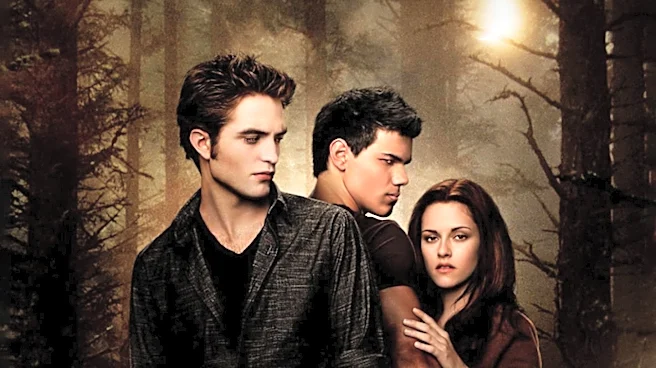
The Twilight Saga, which originated as a novel in 2005, evolved into a series of five films released between 2008 and 2012. This franchise chronicles the romantic entanglements of Bella Swan with the vampire Edward Cullen and the werewolf Jacob Black.
The film series includes 'Twilight,' 'The Twilight Saga: New Moon,' 'The Twilight Saga: Eclipse,' 'The Twilight Saga: Breaking Dawn - Part 1,' and 'The Twilight Saga: Breaking Dawn - Part 2.' Beyond the films, graphic novels have also been produced, offering a visual interpretation of the popular saga. The franchise gained significant attention upon its cinematic debut in 2008, despite mixed critical reception, and became a defining cultural phenomenon of the late 2000s. Robert Pattinson, who played Edward Cullen, later sought roles to diversify his acting career beyond the teen idol image established by Twilight.
Why It's Important?
The Twilight Saga's success marked a significant shift in teen franchise cinema, introducing darker themes and supernatural romance to a broad audience. Its immense popularity paved the way for other young adult dystopian and fantasy franchises, such as 'The Hunger Games' and 'Divergent,' by demonstrating the commercial viability of such narratives. The franchise's impact extended beyond box office numbers, influencing cultural trends and the careers of its lead actors. For instance, Robert Pattinson's subsequent career choices reflect a deliberate effort to move away from the 'teen idol' persona, highlighting the profound and sometimes challenging influence of breakout roles in major franchises on actors' professional trajectories. The saga's enduring appeal also underscores the power of compelling storytelling in various media, from novels to films and graphic novels, to capture and sustain audience engagement.
What's Next?
While the original film series concluded in 2012, the enduring legacy of The Twilight Saga suggests potential for future adaptations or spin-offs, though none have been officially announced. The continued availability of the films on streaming platforms like Netflix and Prime Video ensures its accessibility to new generations of viewers, maintaining its cultural relevance. The graphic novel adaptations also indicate a sustained interest in exploring the saga through different artistic mediums. The impact of the franchise on its lead actors, particularly Robert Pattinson, continues to be observed as they pursue diverse roles, demonstrating how such a defining early career experience can shape an actor's long-term professional choices and public perception. The success of Twilight also continues to serve as a case study for studios looking to adapt popular young adult novels into lucrative film franchises.
Beyond the Headlines
The Twilight Saga's cultural phenomenon extends beyond its entertainment value, offering insights into the evolving landscape of young adult literature and cinema. Its exploration of themes like forbidden love, identity, and the supernatural resonated deeply with its target demographic, influencing fashion, music, and fan culture. The saga also sparked discussions about gender roles and relationships within its fantastical framework. The critical reception, often contrasting sharply with its commercial success, highlights a broader disconnect between critical acclaim and popular appeal in certain genres. Furthermore, the franchise's success underscored the power of dedicated fan bases in driving cultural phenomena and influencing media consumption patterns. The graphic novel adaptations exemplify how intellectual properties can be successfully translated across different media, catering to diverse audience preferences and extending the life of a narrative.