









What's Happening?
U.S. stock futures experienced a slight decline as investors awaited the release of key employment data that could influence the Federal Reserve's monetary policy decisions. The Dow Jones Industrial Average futures lost 35 points, while S&P 500 and Nasdaq-100
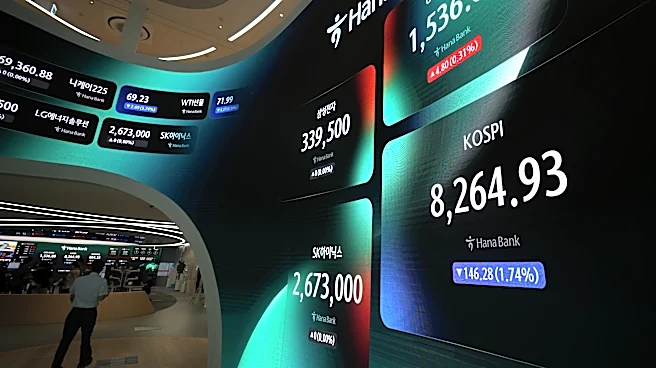
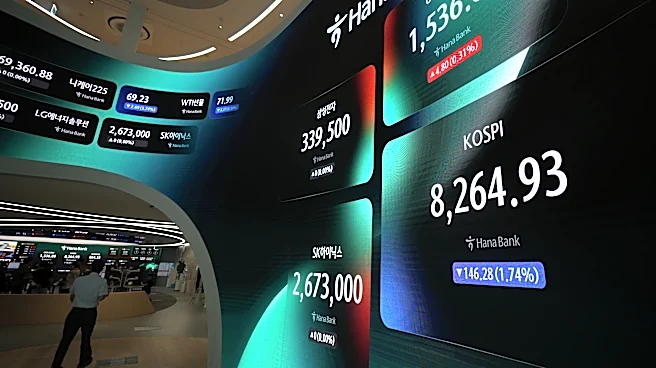
futures also saw minor decreases. This movement followed a session where major U.S. averages ended lower, with significant losses in the semiconductor sector. The VanEck Semiconductor ETF dropped 5.4%, impacting companies like Micron Technology and Sandisk, which saw declines of over 10%. In Asia, South Korea's Kospi led losses, closing down 7.89%, while Japan's Nikkei 225 and Australia's S&P/ASX 200 also faced declines. Despite these setbacks, some analysts view the rotation out of semiconductors as a healthy market adjustment.
Why It's Important?
The performance of U.S. stock futures is closely watched as it can signal broader economic trends and investor sentiment. The anticipated employment data is crucial as it may affect the Federal Reserve's approach to interest rates and monetary policy. A strong jobs report could lead to tighter monetary policy, impacting borrowing costs and investment strategies. Conversely, weaker employment figures might prompt a more dovish stance from the Fed, potentially supporting market growth. The semiconductor sector's volatility highlights the market's sensitivity to sector-specific developments, which can have ripple effects across global markets.
What's Next?
Investors are keenly awaiting the June jobs report, which is expected to provide insights into the U.S. labor market's health. The report's findings could influence the Federal Reserve's policy decisions in the coming months. Market participants will be watching for any shifts in employment trends that could signal changes in economic momentum. Additionally, the ongoing rotation in market sectors may continue as investors adjust their portfolios in response to evolving economic conditions and policy expectations.