






What's Happening?
The Carolina Panthers are embarking on a significant $1.3 billion overhaul of Bank of America Stadium in Charlotte. This extensive renovation project aims to upgrade every seat, scoreboards, concourses, luxury suites, club areas, and the mechanical, electrical,
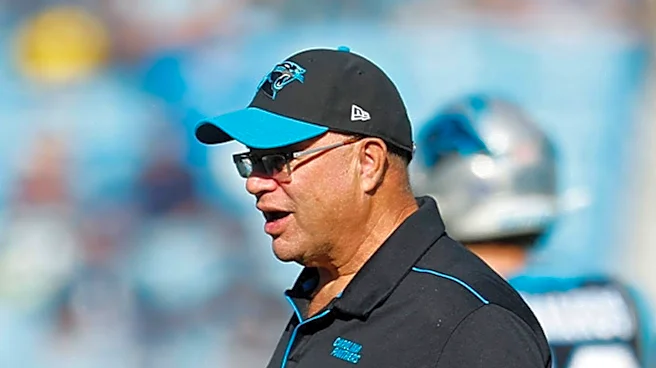
and plumbing systems within the stadium. The work is scheduled to commence after the current NFL season concludes and is expected to reduce the stadium's 75,000-seat capacity, though the exact extent of the reduction has not yet been disclosed by the team. The funding for this ambitious project will be split, with public money covering $650 million, and Panthers owner David Tepper responsible for the remaining half, as well as any potential cost overruns. Team officials have expressed their hope that these upgrades will position Charlotte as a more attractive venue for hosting major NFL events, specifically the NFL Draft and a future Super Bowl.
Why It's Important?
This $1.3 billion stadium overhaul represents a substantial investment in Charlotte's infrastructure and the Carolina Panthers' long-term presence in the city. For the local economy, the project is expected to generate construction jobs and, once completed, potentially boost tourism and local business revenue through increased event hosting. Securing events like the NFL Draft and a Super Bowl would bring significant national attention and economic benefits to Charlotte, including increased hotel bookings, restaurant patronage, and retail sales. The public funding component, totaling $650 million, signifies a considerable commitment from taxpayers, raising questions about the return on investment for the community versus the private benefits for the team owner. The success of attracting these high-profile events will be crucial in justifying the public expenditure. Furthermore, the modernization of Bank of America Stadium aims to enhance the fan experience, potentially increasing attendance and team revenue, which could have a positive impact on the team's financial stability and competitiveness within the league.
What's Next?
The stadium overhaul project is slated to begin after the current NFL season, with construction expected to impact the stadium's seating capacity. The Panthers will need to manage the construction phases carefully to minimize disruption to future seasons and fan experience. A key objective for the team is to successfully bid for and host the NFL Draft and a Super Bowl. While the next open Super Bowl is in 2031, the team will need to address potential hurdles, such as ensuring adequate hotel space in Charlotte to accommodate the influx of visitors these events would bring. The ongoing progress of the renovations and the team's efforts to secure these major events will be closely watched by both local residents and the broader NFL community. The long-term success of this investment will be measured by its ability to attract and sustain high-profile events, thereby solidifying Charlotte's status as a premier sports destination.
Beyond the Headlines
The decision to invest $1.3 billion in stadium renovations, with a significant portion funded by public money, reflects a broader trend in professional sports where public-private partnerships are formed to finance large-scale infrastructure projects. This often sparks debate about the allocation of public funds and whether such investments yield sufficient community benefits to outweigh the costs. Beyond the immediate economic impact, the modernized stadium could enhance Charlotte's image as a vibrant, modern city capable of hosting world-class events, potentially attracting further investment and talent. However, the challenge of securing major events like the Super Bowl, despite the upgrades, highlights the intense competition among cities and the need for comprehensive infrastructure, including sufficient hospitality options. This project also underscores the evolving expectations of sports fans, who increasingly demand state-of-the-art facilities and amenities, pushing teams and cities to continuously upgrade their venues to remain competitive and relevant.