




What's Happening?
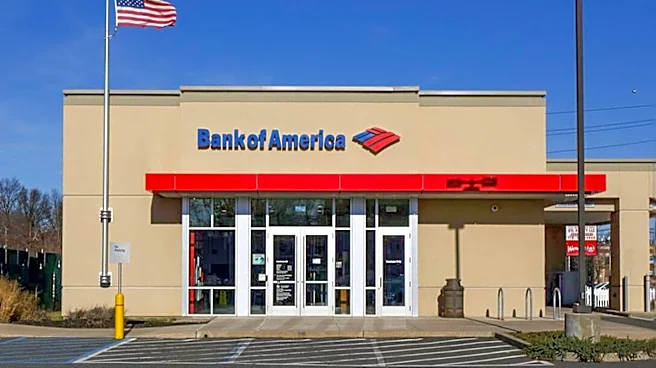
Bank of America is actively addressing numerous software security flaws identified by Mythos, an advanced AI model developed by Anthropic. Mythos, which specializes in multi-step reasoning and agentic coding, uncovered thousands of critical zero-day vulnerabilities
in the bank's internal systems and third-party software. While the AI model was initially withheld from the public due to its dual-use nature, Anthropic launched Project Glasswing to provide restricted access to tech giants and financial institutions for proactive AI-driven code analysis. According to CEO Brian Moynihan, Bank of America hired 1,000 external contractors in the second quarter of 2026 to assist its existing 3,000 technical staff in patching these vulnerabilities. Moynihan also disclosed that 'a couple hundred million dollars plus' has been spent on software remediation and anti-money-laundering compliance work.
Why It's Important?
This development highlights a critical and evolving challenge for the U.S. financial sector: the increasing sophistication of cybersecurity threats and the role of advanced AI in both identifying and potentially creating these vulnerabilities. Bank of America's substantial investment in remediation, including hiring a large contingent of contractors, underscores the severity and complexity of these AI-discovered flaws. For the broader U.S. economy, the security of financial institutions is paramount, as breaches can lead to significant financial losses, data compromise, and erosion of public trust. This situation emphasizes the need for continuous investment in cybersecurity infrastructure and skilled personnel across all industries, particularly those handling sensitive financial data. The incident also signals a new era where AI tools are not just for defense but also for uncovering vulnerabilities that human experts might miss, pushing the boundaries of cybersecurity readiness.
What's Next?
The ongoing remediation efforts at Bank of America are expected to continue, with the 1,000 contractors still assisting in security patching. This situation will likely prompt other major U.S. financial institutions to re-evaluate their own cybersecurity defenses and potentially seek access to advanced AI vulnerability detection tools like Mythos. The financial industry may see an increased allocation of resources towards AI-driven security solutions and a greater demand for cybersecurity professionals. Regulatory bodies might also consider new guidelines or requirements for financial institutions regarding AI-powered vulnerability assessments and remediation strategies. The long-term impact could be a significant shift in how cybersecurity is approached, with a greater reliance on AI for proactive threat detection and a continuous cycle of patching and system hardening.
Beyond the Headlines
The use of advanced AI like Mythos to uncover vulnerabilities in critical financial infrastructure raises profound ethical and strategic questions. While Project Glasswing aims for defensive use, the inherent 'dual-use nature' of such AI models means they could also be weaponized for cyberattacks. This creates a technological arms race where the tools for defense are also the tools for offense. For the U.S., this implies a need for robust national cybersecurity policies, international cooperation on AI safety, and potentially new regulatory frameworks to govern the development and deployment of powerful AI in sensitive sectors. The incident at Bank of America serves as a stark reminder that as AI capabilities advance, so too does the potential for both unprecedented security and unprecedented risk, demanding a proactive and comprehensive approach to digital defense.