




What's Happening?
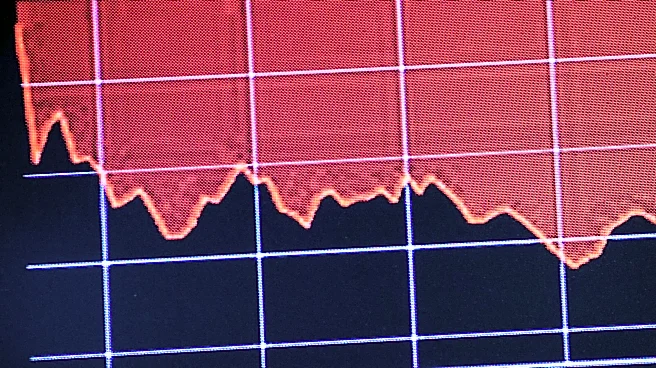
Shares of Alphabet (NASDAQ:GOOGL) (NASDAQ:GOOG), the parent company of Google Search, YouTube, and Gemini, recently dropped to a 52-week low of $260.69. Despite a slight rebound to $272.44, this still represents a 15.4% decrease from its closing price
on October 28, the day the company reported its third-quarter results. The stock is also significantly down from its high of $404.47. This decline is largely attributed to investor concerns regarding Alphabet's substantial capital expenditures. The company is projected to invest between $195 billion and $205 billion this year into building data centers and other essential infrastructure, with even higher spending anticipated in 2027. This significant investment led to a negative free cash flow of $9 billion in the third quarter. However, these investments are also fueling the growth of promising new business segments, particularly in AI chips and cloud services.
Why It's Important?
Alphabet's substantial investments in infrastructure and AI chips are critical for its long-term growth and competitive positioning in the technology sector. The company designs its own custom AI chips, Tensor Processing Units (TPUs), and now offers complete TPU systems to external clients. These sales have become a significant contributor to Google Cloud's expansion. The profitability of Google Cloud is also rapidly increasing, with its operating income more than tripling to $11 billion in the third quarter and its operating margin rising to 36% from 24%. This indicates that the capital being deployed into data centers and TPUs is yielding positive financial results. Despite the current stock dip, analysts project Alphabet's earnings to grow by approximately 14% annually over the next few years, suggesting that the stock may be undervalued at its current price, trading at about 18 times 2027 earnings estimates.
What's Next?
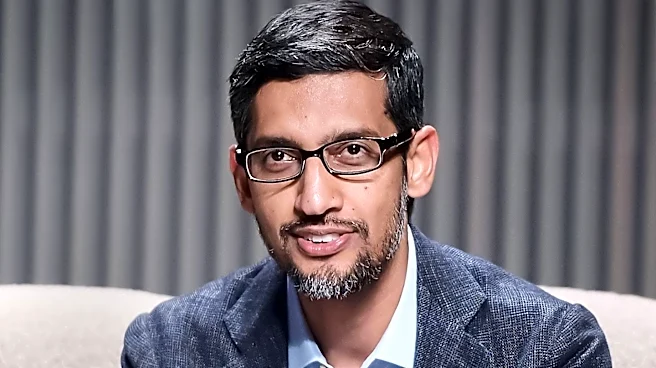
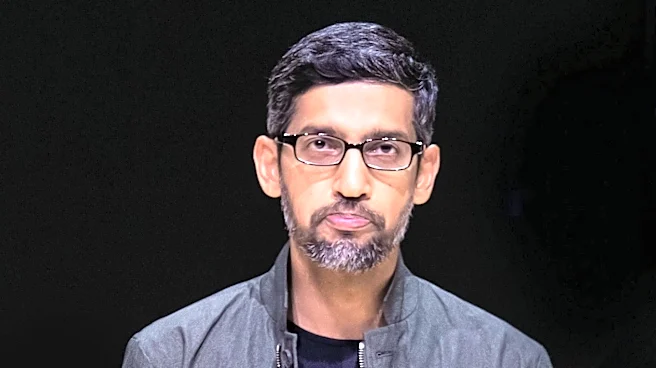
Alphabet's Chief Financial Officer, Anat Ashkenazi, anticipates continued scaling of TPU system sales in the fourth quarter, followed by a substantial revenue increase in 2027. This projected growth in TPU sales is expected to provide significant momentum for Google Cloud in the coming years. CEO Sundar Pichai has noted strong demand for TPU systems across a diverse customer base. Furthermore, Google Cloud CEO Thomas Kurian highlighted that the new TPU 8t and 8i models offer up to 2.7 times better training performance and 80% better price performance for AI model inference compared to previous generations, which is likely to further drive customer adoption. These advancements and anticipated revenue ramps suggest that Alphabet's strategic investments are poised to deliver considerable returns in the near future, potentially alleviating investor concerns about capital expenditures.
Beyond the Headlines
The aggressive capital expenditure by Alphabet underscores a broader industry trend where major tech companies are heavily investing in AI infrastructure to maintain and gain competitive advantages. By designing and selling its own custom AI chips, Alphabet is not only enhancing its internal capabilities but also establishing itself as a key player in the AI hardware market, traditionally dominated by other chip manufacturers. This vertical integration allows Alphabet greater control over its AI ecosystem and potentially better optimization for its services like Google Cloud and Gemini. The success of Google Cloud's soaring profits, despite massive investments, highlights the immense demand for cloud computing and AI-driven solutions across various industries. This strategic direction could lead to a more diversified revenue stream for Alphabet, reducing its reliance on advertising revenue and positioning it strongly for the evolving AI-driven economy.