




What's Happening?
AMD and PsiQuantum have announced a strategic partnership aimed at integrating quantum processors with conventional computers and exploring the market for PsiQuantum's optical switches. Under the agreement, AMD will supply central and graphics processors,
programmable chips, and software, while PsiQuantum will contribute its silicon photonics technology. This collaboration also includes AMD's plan to acquire a stake in PsiQuantum, though the financial details and closing of the investment have not been disclosed. The companies are already engaged in a joint project utilizing AMD graphics processors to simulate molecules for cancer research. PsiQuantum, co-founded by Jeremy O’Brien, is developing a quantum computer that operates using photons and has also developed optical switches for AI data centers. Victor Peng, former AMD president, now serves as PsiQuantum's CEO, highlighting the close ties between the two entities. PsiQuantum recently received a conditional federal loan commitment of up to $150 million to expand its manufacturing and prototyping facilities in Milpitas, California.
Why It's Important?
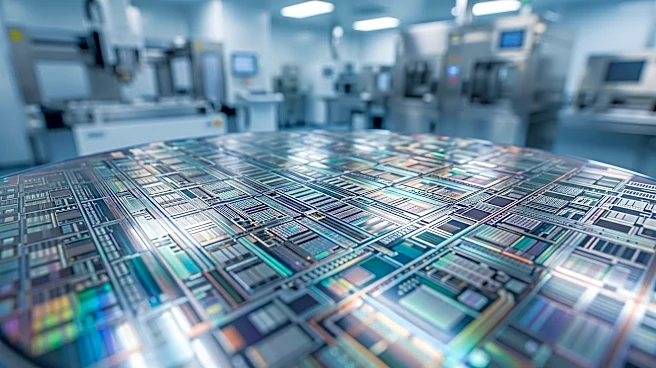
This partnership is significant as it could accelerate PsiQuantum's path to profitability by leveraging AMD's extensive distribution network, particularly for its optical switches. These switches are crucial for connecting servers in AI data centers, acting as 'the glue' that facilitates data transfer as large language models grow. For AMD, the collaboration offers an entry into the burgeoning quantum computing and advanced optical switching markets, potentially diversifying its revenue streams and strengthening its position in high-performance computing. The integration of quantum processors with conventional computers could lead to breakthroughs in complex computational problems, such as drug discovery, as demonstrated by their ongoing cancer research project. The ability to manufacture PsiQuantum's chips on standard silicon wafers makes their technology more accessible and scalable, potentially lowering computing costs as noted by Victor Peng.
What's Next?
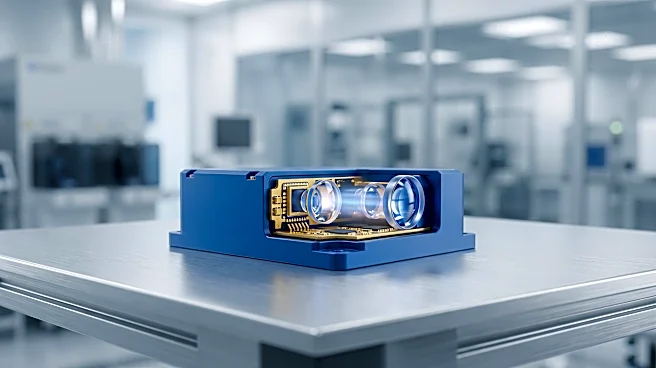
The immediate next steps involve the finalization of AMD's investment in PsiQuantum and the continued development of joint hardware and software systems. PsiQuantum is currently offering samples of its optical switches to prospective customers, and a potential distribution deal with AMD could significantly expand its market reach. The companies will likely continue to explore applications for their combined technologies, particularly in areas requiring high-performance computing and advanced data transfer capabilities. PsiQuantum's expansion of manufacturing and prototyping facilities in Milpitas, supported by the federal loan commitment, indicates a push towards scaling production. Further announcements regarding specific product launches or customer adoptions of their optical switches are anticipated as the partnership matures.
Beyond the Headlines
This collaboration underscores a broader trend in the technology industry where quantum computing startups are seeking strategic alliances with established hardware giants to commercialize their innovations and secure funding. PsiQuantum's dual focus on developing a full-scale quantum computer and commercializing optical switches demonstrates a pragmatic approach to generating revenue while pursuing long-term ambitious goals. The development of optical switches, which allow data centers to steer light signals without converting them to electricity, represents a significant advancement in data center efficiency and could become a critical component in the infrastructure supporting increasingly complex AI models. This partnership also highlights the growing convergence of quantum and classical computing, suggesting a future where hybrid systems become the norm for tackling the most challenging computational problems.