





What's Happening?
Residential kitchen design is increasingly incorporating double islands to improve functionality and create connected living spaces. Designers are utilizing this approach to separate functional zones within the kitchen, such as dedicated areas for cooking
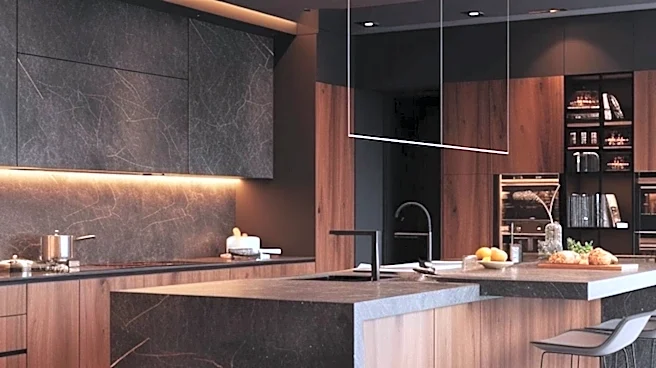
and cleanup versus serving and entertaining. This trend addresses the evolving role of the kitchen as a central hub for family life, encompassing cooking, dining, homework, and social gatherings. For instance, Bianca Fathauer, founder and principal designer of Splendid Home, designed a kitchen with one island for prep and cooking, including a panel-ready dishwasher, and a second appliance-free island for serving and entertaining. This separation allows for more intentional zoning and maintains comfortable walkways, preventing the issues that can arise from a single, oversized island. The design also aims to integrate dining areas directly into the kitchen, making them feel like part of everyday life rather than separate formal spaces.
Why It's Important?
The adoption of double kitchen islands signifies a significant shift in residential interior design, reflecting changing lifestyle needs and priorities for homeowners. This design choice directly impacts how families interact within their homes, promoting greater connectivity and efficiency. By creating distinct functional zones, double islands can reduce clutter and improve workflow, making daily tasks more manageable and enjoyable. This trend also highlights a broader movement towards more versatile and adaptable home spaces that can accommodate multiple activities simultaneously. For the design and construction industries, this means a demand for innovative solutions that maximize space and functionality, potentially influencing material choices, appliance integration, and overall kitchen layouts. Homeowners stand to gain from more organized and aesthetically pleasing kitchens that better support their dynamic family lives, while designers and builders can differentiate their offerings by incorporating these advanced functional layouts.
What's Next?
The continued evolution of kitchen design is likely to see further innovations in how space is utilized and optimized for modern living. As kitchens remain central to family life, designers may explore more integrated solutions that blend cooking, dining, and living areas seamlessly. This could involve advanced smart home technologies that enhance kitchen functionality, or modular designs that allow for greater flexibility. The emphasis on creating connected and multi-functional spaces suggests a future where kitchens are not just for preparing food but are integral to the home's social and operational core. Designers will continue to focus on aesthetic consistency and material selection to ensure these complex layouts remain cohesive and visually appealing, potentially leading to new trends in countertop materials, cabinetry, and lighting that support the double island concept.
Beyond the Headlines
The rise of double kitchen islands reflects a deeper cultural shift towards the kitchen as the true heart of the home, moving beyond its traditional utilitarian role. This design choice underscores a desire for spaces that foster connection and community within the family, allowing individuals to engage in different activities while remaining together. It also speaks to an increasing appreciation for thoughtful design that prioritizes both aesthetics and practicality. The careful consideration of circulation, sightlines, and material consistency in these designs highlights a growing sophistication in homeowner expectations. This trend could also influence the development of new kitchen appliances and accessories tailored to multi-zone layouts, further integrating technology and design to create highly efficient and enjoyable domestic environments. The focus on natural elements and cohesive design language also points to a broader trend in interior design that seeks to create calm, intentional, and harmonious living spaces.