



What's Happening?
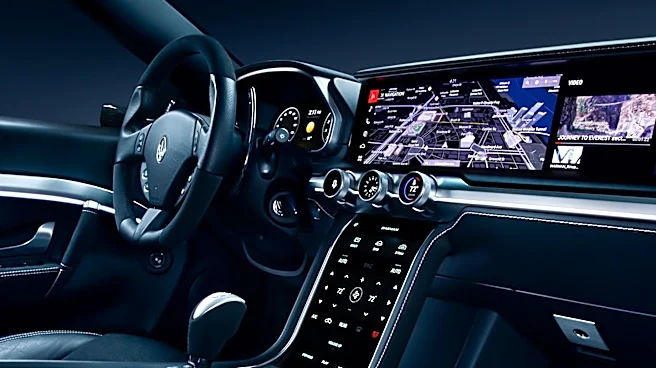
The automotive industry is experiencing a renewed appreciation for tactile switchgear, such as physical knobs and buttons, in car interiors. This trend is highlighted by Audi's CEO, Gernot Döllner, who expressed enthusiasm for the quality and feel of
the switchgear in the company's new Nuvolari supercar. This shift marks a departure from the previous widespread adoption of touchscreens for controlling various vehicle functions. The article notes a nostalgic sentiment for the 'Aughts' (2000s) when tactile switchgear was more prevalent and considered a hallmark of quality and design. This return to physical controls is seen as a response to the 'touchscreen world' and a desire for a more intuitive and satisfying user experience in vehicles.
Why It's Important?
This resurgence of tactile controls in automobiles signifies a potential re-evaluation of user interface design across various industries. For the U.S. automotive market, it could mean a shift in consumer preferences, with buyers increasingly valuing physical feedback and ease of use over purely digital interfaces. This trend could influence design and engineering decisions for car manufacturers, potentially leading to increased investment in the development of high-quality physical controls. It also suggests that while technology advances, there remains a fundamental human preference for certain analog interactions, especially in contexts where quick, intuitive control is crucial, such as driving. This could impact suppliers of automotive components and interior design specialists, emphasizing craftsmanship and material quality in switchgear production.
What's Next?
The emphasis on tactile switchgear, as exemplified by Audi's Nuvolari, suggests that other automotive manufacturers may follow suit, integrating more physical controls into their future vehicle designs. This could lead to a broader industry trend where the balance between touchscreens and physical buttons is re-evaluated, potentially resulting in hybrid interfaces that offer the best of both worlds. Consumers might increasingly demand cars that provide a more engaging and less distracting driving experience through intuitive physical controls. This trend could also extend beyond the automotive sector, influencing product design in other areas where user interaction and tactile feedback are important, such as home appliances or industrial equipment. The long-term impact will depend on consumer adoption and the ability of manufacturers to innovate within this renewed focus on physical interaction.
Beyond the Headlines
The return of physical knobs and switches in cars reflects a deeper societal yearning for a 'digital detox' and a more tangible interaction with technology. In an increasingly digital world, the satisfaction derived from a well-engineered physical control can offer a sense of control and quality that touchscreens sometimes lack. This phenomenon highlights the psychological aspect of product design, where the 'feel' and 'sound' of an interaction contribute significantly to the perceived value and user experience. It also raises questions about the long-term effects of an over-reliance on touch-based interfaces on cognitive load and driver distraction. The automotive industry's response to this preference for tactile feedback could serve as a case study for other sectors grappling with the balance between digital innovation and human-centric design principles, suggesting that sometimes, older technologies offer superior user experiences.