









What's Happening?
Relativity Space has announced plans to launch a Mars orbiter in 2028 as part of its new Interplanetary Sciences Program. This initiative aims to make scientific discovery more accessible and cost-effective by developing advanced interplanetary capabilities.
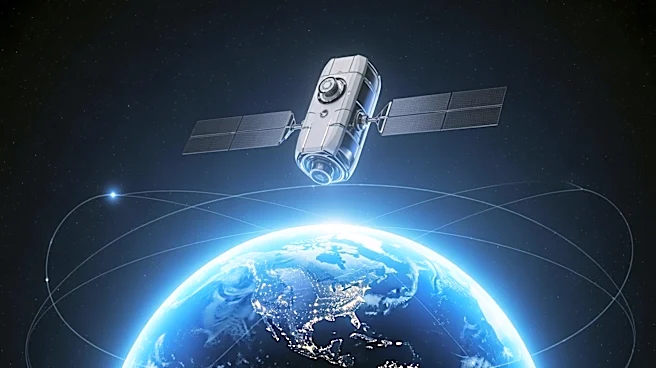
The Mars mission will include a telecommunications orbiter equipped with instruments from NASA's Ames Research Center, such as a radar for mapping subsurface ice and geology. The orbiter will also serve as a communications node, providing high-bandwidth links to Earth and Martian surface spacecraft. The mission will be launched on Relativity's Terran R reusable launch vehicle, with funding support from an undisclosed philanthropic organization.
Why It's Important?
This mission represents a significant step in the commercialization of space exploration, potentially reducing costs and increasing the frequency of scientific missions. By leveraging commercial innovation alongside NASA's expertise, Relativity Space aims to accelerate the availability of critical data for future human missions to Mars. The initiative could pave the way for more private sector involvement in space exploration, fostering partnerships between industry, academia, and government agencies. This could lead to advancements in technology and science, benefiting a wide range of stakeholders, including researchers and space agencies.
What's Next?
Relativity Space's Mars orbiter mission is intended as a proof of concept for future interplanetary missions. The company has not disclosed specific details about subsequent missions but aims to collect data throughout the solar system. The success of this mission could influence future collaborations and investments in space exploration, potentially leading to more ambitious projects. As the launch date approaches, further technical details and partnerships may be announced, shaping the future landscape of commercial space exploration.