


What's Happening?
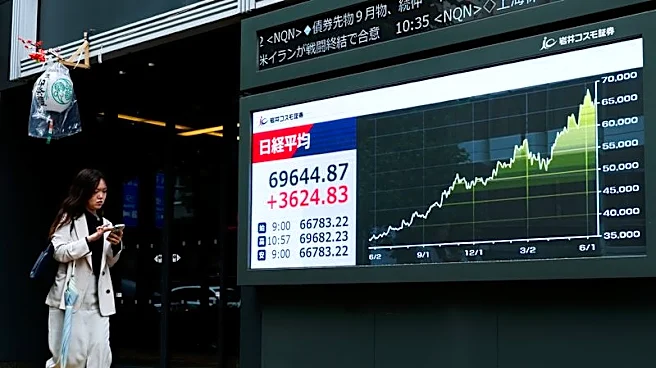
Federal Reserve Chairman Kevin Warsh's approach to monetary policy, which emphasizes reading market signals over traditional economic forecasts, is being tested by recent extreme volatility, particularly concerning Nvidia. Last week, a stock market sell-off
led to a decline in market-based probabilities for Fed interest rate hikes. However, a subsequent rally, partly driven by Nvidia's performance, quickly restored confidence in further rate increases. Warsh aims to shift the Fed's focus from daily market fluctuations to long-term economic forces, yet he also advocates for using market indicators as a primary guide for policy. This creates a dilemma, as market signals, while potentially offering better forecasting, can be highly volatile and short-term oriented, as demonstrated by the rapid shifts in the Goldman Sachs Financial Conditions Index following Nvidia's movements.
Why It's Important?
This situation highlights a critical challenge in modern monetary policy: how to effectively use market signals without being swayed by short-term volatility. Chairman Warsh's preference for market indicators over traditional economic models stems from a belief that many forecasts are flawed and data quality is often poor. If the Fed relies heavily on market signals, extreme fluctuations, such as those seen with Nvidia, could lead to inconsistent or reactive policy decisions, potentially destabilizing the economy. The debate over which market signals to prioritize and for how long they need to persist to guide policy is central to this dilemma. The effectiveness of Warsh's strategy will determine whether the Fed can achieve its objectives of price stability and maximum employment in an increasingly complex and fast-moving financial landscape, impacting businesses, investors, and consumers across the U.S.
What's Next?
Chairman Warsh is expected to continue his push for the Fed to broaden its thinking and delve deeper into long-term economic forces, as evidenced by his AI task force. However, the recent market volatility will likely intensify scrutiny of his reliance on market signals. The Fed will need to refine its methodology for interpreting these signals, potentially focusing on longer-term trends rather than daily movements. Future press conferences and policy statements from Warsh will be closely watched for any adjustments to his communication style or policy guidance, especially given his general aversion to forward guidance. The ongoing economic impact of artificial intelligence, which Warsh is actively studying, will also play a significant role in shaping future policy decisions, as its effects on inflation and growth remain uncertain.
Beyond the Headlines
The tension between short-term market volatility and long-term economic policy reflects a deeper philosophical debate about the role of central banks in a data-rich, interconnected world. Warsh's skepticism towards traditional economic models and his emphasis on market-derived forecasts challenge established practices and could lead to a fundamental re-evaluation of how monetary policy is formulated. This shift could empower financial markets with greater influence over policy decisions, potentially increasing their sensitivity to speculative bubbles or irrational exuberance. Conversely, it could also lead to more agile and responsive policy if market signals are accurately interpreted. The long-term implications include a potential change in how economists are trained, how financial data is collected and analyzed, and the very nature of the Fed's independence and accountability in an era where market sentiment can shift rapidly.