




What's Happening?
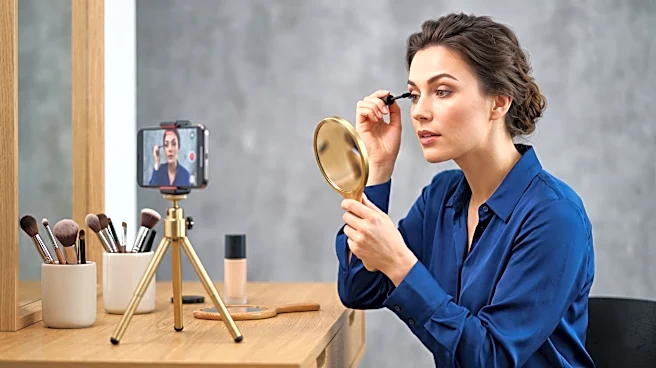
Mikayla Nogueira, a prominent beauty influencer, continues to hold significant commercial power despite ongoing online criticism regarding sponsored content and product recommendations. Her partnership with Sephora for the launch of her beauty brand,
POV Beauty, and her role in hosting a livestream for Sephora's new TikTok Shop have intensified debate. Modern Retail reported that Sephora utilized Nogueira as a central figure in its TikTok Shop launch, initially featuring POV Beauty and Sephora Collection products. Nogueira's substantial following, reportedly around 20 million across social platforms, provides brands with access to a large consumer base, even amidst controversy. This situation highlights a paradox where the attention generated by criticism can paradoxically enhance an influencer's value to advertisers. Past controversies, such as 'mascara gate' in 2023, where viewers questioned the authenticity of her lash enhancements in a sponsored L'Oréal video, have fueled discussions about consumer trust in beauty influencers and the disclosure of financial relationships, as mandated by the US Federal Trade Commission.
Why It's Important?
The continued commercial success of influencers like Mikayla Nogueira, despite public scrutiny, underscores a significant shift in marketing and consumer trust dynamics within the beauty industry. For brands like Sephora, the immense reach and engagement offered by influencers can outweigh concerns about their public image, demonstrating that visibility often translates directly into sales. The launch of POV Beauty in Sephora, which reportedly exceeded first-week expectations by 80 percent, illustrates the tangible economic impact influencers can have, even when facing negative online reviews. This scenario challenges traditional notions of brand loyalty and consumer confidence, suggesting that a segment of the audience prioritizes access to products and trends over an influencer's perceived credibility. It also highlights the ongoing struggle for regulatory bodies like the FTC to ensure transparent advertising practices in the rapidly evolving digital landscape, where the line between authentic recommendation and paid promotion can be blurred.
What's Next?
The ongoing debate surrounding Mikayla Nogueira's influence and the commercial decisions of retailers like Sephora is likely to continue shaping the future of influencer marketing. Brands will need to navigate the complex balance between leveraging an influencer's reach and maintaining consumer trust, potentially leading to more stringent vetting processes or clearer disclosure requirements for sponsored content. Consumers, in turn, may become more discerning about the authenticity of product recommendations, pushing for greater transparency from both influencers and brands. The success of POV Beauty's launch could encourage other retailers to invest in creator-led brands, further integrating influencers into the product development and retail ecosystem. This trend could also prompt a re-evaluation of how 'influence' is measured, moving beyond follower counts to include engagement quality and the ability to drive sales, even in the face of controversy.
Beyond the Headlines
The phenomenon of influencers like Mikayla Nogueira maintaining commercial viability despite controversy reveals deeper societal implications regarding attention economy and the nature of trust in the digital age. The paradox that criticism can simultaneously damage credibility and increase visibility suggests that for some, any attention is good attention, making an influencer 'hard to ignore' for brands. This raises ethical questions about the responsibilities of influencers to their audience and the responsibilities of brands in choosing their ambassadors. It also points to a potential shift in consumer behavior where engagement and entertainment value might sometimes supersede traditional notions of trustworthiness. The ongoing discussion on platforms like Reddit, while not representative of all consumer sentiment, illustrates how polarization can keep an influencer at the center of conversation, effectively turning controversy into a form of sustained marketing. This dynamic could lead to a redefinition of what constitutes a 'successful' public figure in the digital sphere.