





What's Happening?
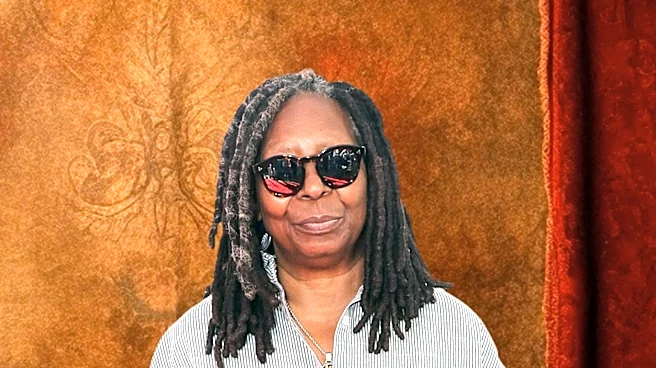
Whoopi Goldberg, a co-host on 'The View' since 2007, has publicly defended her substantial paycheck from the show. In an interview with Radar Online, Goldberg stated that she is 'well-paid' because she 'does a good job' and 'earns her dough,' regardless
of whether everyone agrees with her. She also mentioned that she doesn't expect to receive 'guy money' for movie roles but is content with what she earns. Goldberg, who is in her 20th season on the show, expressed gratitude for her job, especially given that many people are currently unemployed. She emphasized her enjoyment of discussing topics and interacting with people, and her comfort in expressing her beliefs.
Why It's Important?
Whoopi Goldberg's comments shed light on the financial realities and public scrutiny faced by high-profile television personalities. Her defense of her salary highlights the ongoing debate about fair compensation in the entertainment industry, particularly concerning gender pay gaps, as she alluded to not receiving 'guy money' for movie roles. Her statement also touches on the broader economic context, acknowledging the privilege of having a stable job when many are unemployed. For viewers, her transparency about her earnings and her rationale behind it can either foster understanding or fuel resentment, depending on individual perspectives on celebrity wealth. This discussion contributes to the larger conversation about economic inequality and the value placed on different forms of labor in society.
What's Next?
Goldberg's candid remarks are likely to continue to spark discussions among viewers and within the entertainment industry about celebrity compensation and the perceived value of television personalities. While her comments are a personal defense, they could also encourage other public figures to address their own salaries or contribute to broader conversations about pay equity. The ongoing success and longevity of 'The View,' with Goldberg as a central figure, suggest that her role is indeed valued by the network and its audience. This situation may also prompt further media attention on the financial aspects of talk show hosting, potentially leading to more transparency or debate about how such salaries are determined and justified in the public eye.
Beyond the Headlines
Whoopi Goldberg's unapologetic stance on her salary delves into deeper societal perceptions of success, worth, and the ethics of wealth. Her assertion that she 'earns her dough' challenges the notion that high salaries in entertainment are inherently undeserved, framing it instead as a direct result of hard work and performance. This perspective can resonate with individuals who believe in meritocracy but may also clash with those who view excessive celebrity wealth as problematic amidst widespread economic hardship. Furthermore, her gratitude for having a job in a challenging economic climate underscores the precariousness of employment for many, drawing a stark contrast between the experiences of the highly successful and the general populace. This conversation implicitly raises questions about the societal value placed on different professions and the fairness of economic distribution.