








What's Happening?
Two prominent supernatural horror franchises, 'The Conjuring' and 'Insidious,' exhibit a significant thematic and stylistic kinship despite their distinct narratives. Both series emerged during a resurgence of supernatural horror in the late 2000s and early
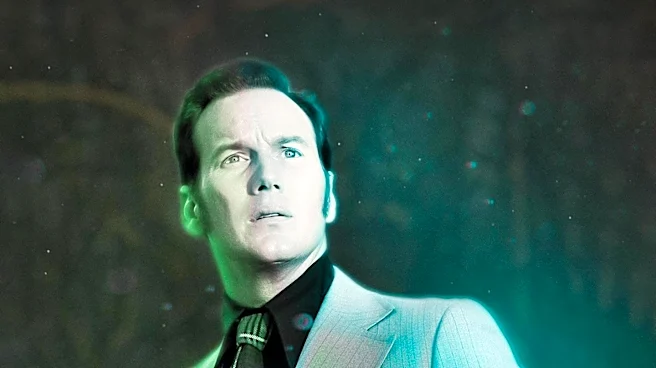
2010s, appealing to audiences seeking stories that blend folklore with psychological unease. 'The Conjuring,' released in 2013, is noted for its meticulous research into real-life paranormal cases, particularly those investigated by Ed and Lorraine Warren, and its commitment to period realism. Director James Wan emphasized honoring the real people behind the myths and grounding the supernatural in a familiar reality. 'Insidious,' from 2010, focuses on visceral dread through dream-travel horror and unresolved trauma, utilizing practical effects and sound design to amplify unease. Both franchises explore invisible horrors, not just of homes but of the psyche, and utilize narrative portals and liminal transitions to bridge worlds, such as Ed Warren opening a metaphysical portal in 'The Conjuring' or the 'Last Wall' in 'Insidious.'
Why It's Important?
The shared thematic and stylistic approaches of 'The Conjuring' and 'Insidious' are important for understanding the evolution of modern horror cinema in the U.S. These franchises have significantly influenced the genre by demonstrating how authentic, old-world fears can be revitalized for contemporary audiences. Their success highlights a shift away from CGI spectacle towards atmosphere, sound design, and slow-burn dread, proving that psychological unease and character-driven trauma resonate deeply with viewers. This approach has not only garnered critical and commercial success but also inspired numerous spin-offs and academic discussions on paranormal belief, shaping how future horror stories are conceived and received. The emphasis on 'operational authenticity' and the exploration of personal and inherited trauma in both series underscore a broader cultural interest in the psychological dimensions of fear, impacting storytelling trends across various media.
What's Next?
The collaborative legacy of 'The Conjuring' and 'Insidious' is expected to continue influencing the horror genre, with ongoing spin-offs and precursor projects within the 'Conjuring Universe' and similar franchises. This trend suggests a continued focus on psychological horror, authentic research, and thematic depth rather than overt sensationalism. Future productions are likely to further explore the boundaries between the supernatural, psychological, and cultural aspects of hauntings, prompting ongoing academic and public discourse on what defines fear in modern society. The success of these franchises may also encourage other filmmakers to adopt similar methods of tension-building through restraint and meticulous sound design, further solidifying these techniques as benchmarks for effective horror storytelling. The cultural impact of these films, as artifacts that probe the fragile boundaries between the seen and unseen, is also likely to endure, shaping audience expectations for paranormal narratives.
Beyond the Headlines
The deeper implications of 'The Conjuring' and 'Insidious' extend beyond their entertainment value, touching upon ethical and cultural dimensions of belief and trauma. By grounding their narratives in real-life paranormal investigations (as in 'The Conjuring') or exploring profound psychological trauma ('Insidious'), these films tap into universal human fears and anxieties. They reflect a societal fascination with the unknown and the human struggle to comprehend inexplicable phenomena. The franchises' success also highlights the power of storytelling to transform personal experiences and folklore into widely consumed cultural narratives, influencing public perception of paranormal activity and mental health. The emphasis on 'inherited horror' and 'unresolved grief' in these films suggests a cultural reckoning with past traumas and their lingering effects, making them more than just scary movies but reflections of deeper societal concerns about memory, loss, and the human condition.