



What's Happening?
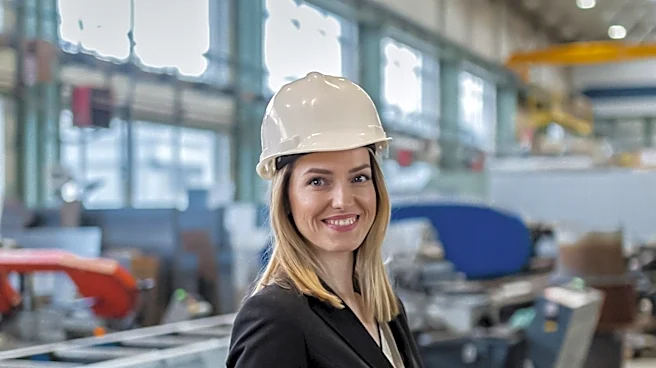
Martina McIsaac, President and CEO of MSC Industrial Supply Co., highlights the critical role of human understanding in leveraging new manufacturing technologies like AI, automation, and digital twins. McIsaac asserts that true productivity gains stem
from understanding the people performing the work, emphasizing that those closest to the job often possess the best solutions. MSC Industrial Supply Co., a major distributor of metalworking and industrial products in North America, aims to act as a 'technical translator' for manufacturers. This involves helping clients navigate complex technological landscapes, identify suitable solutions, supply necessary products, and implement them for measurable productivity improvements. The company is also focused on integrating new digital capabilities while preserving its extensive technical knowledge base, especially as the manufacturing sector faces challenges like an aging workforce. McIsaac stresses the need to combine technology with human expertise to extend knowledge, simplify processes, and enable less experienced workers to achieve higher productivity levels.
Why It's Important?
This perspective is crucial for the U.S. manufacturing sector, which is undergoing significant transformation driven by advanced technologies. McIsaac's emphasis on the human element underscores that technology alone is insufficient for sustained growth and efficiency. For U.S. manufacturers, this means that investments in AI and automation must be complemented by strategies that empower and educate the workforce. Companies like MSC Industrial Supply Co. play a vital role in bridging the knowledge gap between complex innovations and practical application on the factory floor. This approach can help mitigate potential job displacement concerns by focusing on upskilling and reskilling workers, ensuring they can effectively utilize new tools. Ultimately, a human-centric integration of technology can lead to more resilient supply chains, increased domestic production capabilities, and a more competitive manufacturing industry in the U.S., benefiting both businesses and the labor force.
What's Next?
MSC Industrial Supply Co. plans to further its role as a connector between manufacturers and technological solutions, particularly at industry events like IMTS 2026. The company will continue to evolve its associate base, supplementing existing technical expertise with specialists in emerging digital fields. This strategy aims to provide comprehensive support to manufacturers grappling with technology adoption and workforce challenges. The broader manufacturing industry is expected to see continued integration of AI and automation, necessitating a sustained focus on workforce development and technical training. Companies that successfully blend technological advancements with a deep understanding of their human capital will likely lead in productivity and innovation. This also suggests a growing demand for consultative services that help businesses implement complex technologies effectively, ensuring that the benefits of these innovations are fully realized across the U.S. industrial landscape.
Beyond the Headlines
The narrative presented by McIsaac points to a deeper shift in how industrial productivity is defined and achieved. It moves beyond mere technological adoption to encompass organizational culture, employee empowerment, and continuous learning. This perspective challenges the notion that automation will solely replace human labor, instead advocating for a symbiotic relationship where technology augments human capabilities. Ethically, this approach promotes a more inclusive technological transition, ensuring that workers are part of the solution rather than being sidelined. Legally and culturally, it may influence future labor policies and educational curricula, emphasizing skills development that aligns with advanced manufacturing needs. The long-term implication is a more adaptable and skilled U.S. manufacturing workforce, capable of navigating rapid technological changes and maintaining global competitiveness through innovation driven by both machines and human ingenuity.