





What's Happening?
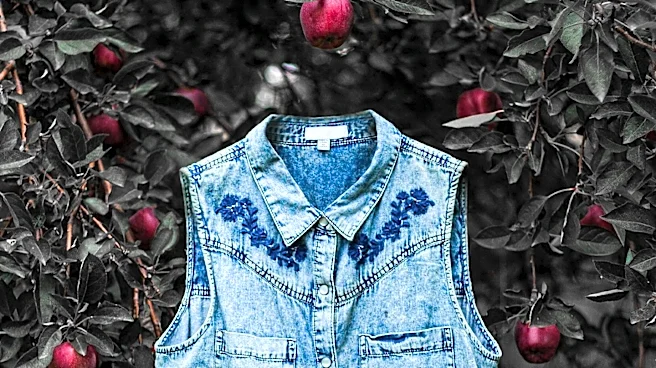
Deep indigo is emerging as the defining denim wash for the upcoming autumn season, replacing lighter summer washes. This shift is particularly evident in the prominence of the indigo denim shirt dress. The trend sees denim moving beyond traditional jeans
into dresses, skirts, and outerwear. Brands are focusing on rich, inky indigo hues, with the shirt dress being highlighted as an accessible and versatile piece. For instance, Marks & Spencer is offering a funnel neck midi column dress in indigo denim, characterized by its timeless silhouette, utility feel from the fabric, and polished look due to contrast stitching. The garment's design includes an adjustable button front and a fabric waist tie, allowing for adaptable styling. This trend signifies a broader movement in fashion where the season is defined by a specific wash rather than just a silhouette, and denim is being re-imagined for various garment types.
Why It's Important?
This trend is significant for the U.S. fashion industry as it indicates a clear direction for autumn collections, influencing design, manufacturing, and retail strategies. Retailers and brands will likely prioritize stocking indigo denim garments, especially shirt dresses, to meet consumer demand. The emphasis on a specific wash over a silhouette suggests a shift in consumer preference towards color and texture as primary drivers for denim purchases. For manufacturers, this means focusing on indigo dyeing processes and potentially investing in sustainable practices, as some international examples show a connection between indigo and material innovation. The versatility of the indigo denim shirt dress, being suitable across seasons and occasions, could lead to increased sales and a longer shelf life for these products, benefiting both brands and consumers. The trend also highlights the potential for value-fashion labels to fill market gaps by offering well-made, accessible indigo denim pieces.
What's Next?
In the coming months, U.S. fashion retailers are expected to heavily feature indigo denim in their autumn collections, with a particular focus on shirt dresses. Consumers will likely see a wider array of indigo denim garments, including jackets, skirts, and various dress styles, available across different price points. Brands may also explore incorporating more intricate details, such as contrast stitching and adjustable features, to enhance the appeal of these items. There could be an increased emphasis on the heritage and craftsmanship associated with indigo, potentially leading to collaborations or collections that highlight unique dyeing techniques or sustainable denim production. The success of this trend will likely influence subsequent seasonal collections, potentially solidifying indigo as a perennial autumn staple and encouraging further innovation in denim applications beyond traditional jeans.
Beyond the Headlines
Beyond the immediate fashion trend, the resurgence of indigo denim carries deeper implications for sustainability and cultural appreciation within the U.S. market. The emphasis on rich, deep indigo hues could encourage a move away from chemically intensive lighter washes, potentially promoting more environmentally friendly dyeing processes. Furthermore, the global context of indigo, particularly its heritage meaning in countries like India, suggests an opportunity for U.S. brands to explore and integrate culturally rich narratives into their denim lines. This could involve ethical sourcing of indigo dyes or collaborations with artisans who specialize in traditional indigo dyeing techniques, fostering a greater appreciation for the material's history and craftsmanship. Such an approach could resonate with consumers increasingly interested in the provenance and ethical footprint of their clothing, shifting denim from a purely casual fabric to one with deeper cultural and environmental significance.